
Charitable Trust Withdrawal Risk Calculator
Select the scenario that matches your situation to see the legal risk level.
You just set up a charitable trust, poured your savings into it, and now you need cash for a house renovation. Can you just write yourself a check? The short answer is no. In almost every jurisdiction, taking money out of a charitable trust for personal use is illegal. It violates the core legal principle that charitable assets must be used solely for public benefit.
However, the reality is more nuanced than a simple "no." There are specific, regulated ways to receive compensation or recover capital if structured correctly from the start. If you pull funds without following these strict rules, you risk losing your tax-exempt status, facing heavy fines, or even criminal charges for fraud.
The Core Rule: No Private Benefit
To understand why you can't just take the money, you have to look at what a charitable trust is. Unlike a standard family trust where the goal is to preserve wealth for heirs, a charitable trust exists to serve a public purpose-like relieving poverty, advancing education, or protecting the environment.
This creates a legal barrier known as the private benefit rule. This rule states that no individual, including the founder (settlor) or the trustees, can personally profit from the trust's assets. If you divert funds to yourself, you are converting public property into private gain. Courts view this as a breach of fiduciary duty. The assets belong to the "public," represented by the state Attorney General or Charity Commission, not to you.
Think of it like this: if you donate $100,000 to build a community center, that money becomes part of the community’s infrastructure. Taking $5,000 back to buy a boat isn’t a withdrawal; it’s theft from the public entity you created.
When Can You Receive Money?
While you cannot raid the trust’s bank account for personal luxuries, there are legitimate scenarios where a settlor or trustee might receive funds. These exceptions are narrow and heavily scrutinized.
- Fair Market Compensation: If you work for the trust as an employee or consultant, you can be paid. However, the salary must be reasonable and comparable to what someone else would earn for the same role in the open market. You cannot pay yourself $200,000 for a job that typically pays $60,000. That difference is considered improper private benefit.
- Reimbursement of Expenses: If you spend your own money on trust-related costs-like buying office supplies or paying for a charity event venue-you can be reimbursed. You must provide receipts, and the expenses must be directly related to the trust’s charitable mission.
- Rent for Property: If you personally own a building and lease it to the trust, the trust can pay you rent. Again, this must be at fair market value. If you charge above-market rates, the excess is viewed as a disguised distribution of trust assets.
In all these cases, transparency is key. Every transaction must be documented, approved by independent trustees (not just you), and disclosed in annual filings. Hiding these payments is a fast track to legal trouble.
The Difference Between Types of Trusts
Confusion often arises because people mix up different types of trusts. Understanding which structure you have is critical to knowing your rights.
| Trust Type | Primary Purpose | Can Founder Take Money? | Tax Status |
|---|---|---|---|
| Charitable Trust | Public benefit (education, relief) | No (except fair wages/reimbursements) | Tax-exempt |
| Discretionary Family Trust | Wealth preservation for family | Yes (at trustee discretion) | Taxed at trust level |
| CRT (Charitable Remainder Trust) | Income for life, then charity | Yes (income stream only) | Tax-deferred growth |
If you want to keep access to your capital while supporting charity, a Charitable Remainder Trust (CRT) might be what you actually need. With a CRT, you transfer assets into the trust, and in return, the trust pays you a fixed income for a set period or for life. After that term ends, the remaining balance goes to the charity. This is a legal way to "take money out" regularly, but it requires giving up the principal eventually.
A standard charitable trust, however, usually implies that the assets are irrevocably dedicated to charity. Once they are in, they stay in until the trust dissolves or merges with another charity.

Consequences of Improper Withdrawals
What happens if you ignore the rules and take the money anyway? The repercussions are severe and multi-layered.
- Loss of Tax Exemption: The tax authority (like the IRS in the US or IRD in New Zealand) will revoke the trust’s tax-exempt status. This means the trust owes back taxes on all its income, plus penalties and interest.
- Personal Liability: Trustees who authorize improper distributions can be held personally liable. They may have to repay the stolen funds from their own pockets. In some cases, courts impose additional punitive damages.
- Criminal Charges: If the intent was fraudulent-meaning you set up the trust specifically to hide money or defraud creditors-you could face criminal prosecution for embezzlement or fraud. This carries potential jail time.
- Cy Pres Doctrine: If a trust fails due to misuse, the court may apply the cy pres doctrine. This allows the court to redirect the remaining assets to a similar charitable purpose, ensuring the money still serves the public, but stripping the original founder of any control.
Regulators are getting better at catching these violations. Automated audits flag unusual transactions between trusts and individuals. If you see a pattern of payments to the settlor, expect an investigation.
How to Structure for Flexibility
If your goal is to support a cause but also maintain financial security for yourself, you need to plan ahead. You cannot change the rules after the money is inside the trust.
First, consider using a Donor-Advised Fund (DAF). A DAF allows you to make a charitable contribution, get an immediate tax deduction, and then recommend grants over time. While you don’t "own" the money, you retain significant influence over where it goes. It offers liquidity and flexibility that a rigid charitable trust does not.
Second, if you are setting up a trust, ensure the trust deed includes clear provisions for trustee compensation. Define exactly what roles the settlor can fill and how salaries are determined. Having an independent board approve these payments protects you from accusations of self-dealing.
Third, keep meticulous records. Separate your personal finances from the trust’s finances completely. Never commingle funds. Use separate bank accounts, credit cards, and accounting software. When auditors look at your books, they should see a clean wall between your personal life and the charity’s operations.
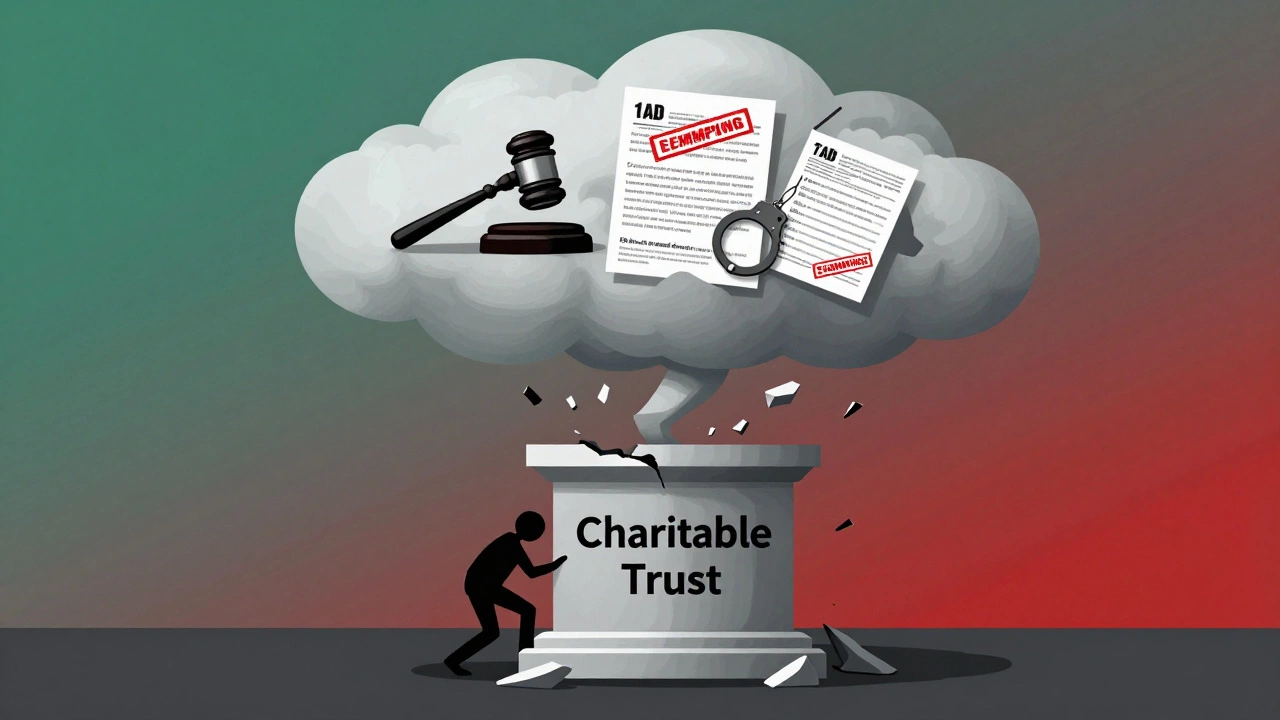
Common Misconceptions
Many founders operate under false assumptions that put them at risk. Let’s clear up three common myths.
Myth 1: "I founded it, so I control it." Control does not mean ownership. As a trustee, you are a steward, not an owner. Your power is limited by the trust deed and the law. You cannot vote to give yourself a bonus unless the deed explicitly allows it and the amount is reasonable.
Myth 2: "It’s my money, I can take it back anytime." If the trust is irrevocable, you legally gave up those rights when you signed the deed. Revocable trusts exist, but they generally do not qualify for charitable tax benefits. You can’t have both full control and tax exemption.
Myth 3: "Small amounts don’t matter." Even small, regular withdrawals add up. If you take $100 a month for "miscellaneous expenses" without receipts, it looks like a systematic siphoning of assets. Regulators look at patterns, not just single large transactions.
Next Steps for Trustees
If you are currently managing a charitable trust and feel financially strained, do not touch the trust account. Instead, consult with a lawyer specializing in non-profit law. They can review your trust deed to see if any loopholes or allowances exist for your specific situation.
If you haven’t set up the trust yet, think carefully about your goals. Do you need liquidity? Do you want to leave a legacy? Or do you want to reduce your taxable estate? Different vehicles serve different purposes. A charitable trust is powerful for legacy and tax efficiency, but it is poor for personal cash flow management.
Remember, the integrity of the charitable sector relies on public trust. When individuals misuse these structures, it hurts everyone by increasing scrutiny and reducing public confidence. Play by the rules, document everything, and seek professional advice before moving a single dollar.
Can a settlor dissolve a charitable trust to get the money back?
Generally, no. Most charitable trusts are irrevocable. Once assets are transferred, they cannot be returned to the settlor. If the trust’s purpose becomes impossible or impractical, a court may allow the trust to be terminated, but the remaining assets must go to another charity via the cy pres doctrine, not back to the founder.
Is it legal for a trustee to pay themselves a salary?
Yes, but only if the trust deed permits it and the salary is reasonable for the services provided. The payment must be approved by independent trustees and documented properly. Unreasonable compensation is considered a breach of fiduciary duty and private benefit.
What is the difference between a charitable trust and a family trust?
A family trust is designed to benefit specific individuals (family members) and allows for flexible distributions. A charitable trust must benefit the public at large and prohibits private benefit. Family trusts offer more control and access to funds, while charitable trusts offer tax exemptions and public recognition.
Can I borrow money from my charitable trust?
No. Lending money to a settlor or trustee is strictly prohibited. It is viewed as a form of private benefit and misappropriation of assets. All trust funds must be used exclusively for the charitable purposes outlined in the trust deed.
What happens if I accidentally misuse trust funds?
You must repay the funds immediately and disclose the error to the other trustees and regulators. Prompt correction can mitigate penalties. However, failing to report it can lead to charges of fraud. Consult a lawyer right away to navigate the remediation process.