After-School Club Cost Calculator
How much could you save?
School-run after-school clubs typically cost $5 or less per session, compared to $25+ for private childcare. See how this impacts your family budget.
Your Savings
Save $1,000+ annuallyTotal Hours
0
Per month
Potential Savings
$0
Per month
Why This Matters
According to the article: School-run clubs cost $5 or less per session, while private care averages $25/hour. This calculator shows you how these programs help families financially while giving kids structure and development opportunities.
Beyond Savings: What Your Child Gains
- 27% 27% improvement in self-reported confidence (NZ Ministry of Education)
- 19% 19% increase in problem-solving skills
- 40% 40% higher participation when kids choose their club
Ever wonder why so many schools in New Zealand and around the world spend time, money, and staff hours running after-school clubs? It’s not just about keeping kids busy until their parents get home. After-school clubs are one of the most powerful, low-cost tools we have to help kids grow into confident, capable, and connected young people.
They Fill a Real Gap in Daily Life
Most kids are in school from 8:30 a.m. to 3:00 p.m. That leaves four to six hours before most parents get home from work. Without anything to do, many kids end up staring at screens, wandering the neighborhood, or feeling bored and disconnected. After-school clubs turn that empty time into structured, meaningful activity.In Wellington, schools with strong after-school programs report fewer incidents of minor vandalism, loitering, or unsupervised hangouts after school. It’s not magic-it’s simple: when kids have something engaging to do, they’re less likely to get into trouble.
Skills You Won’t Learn in a Textbook
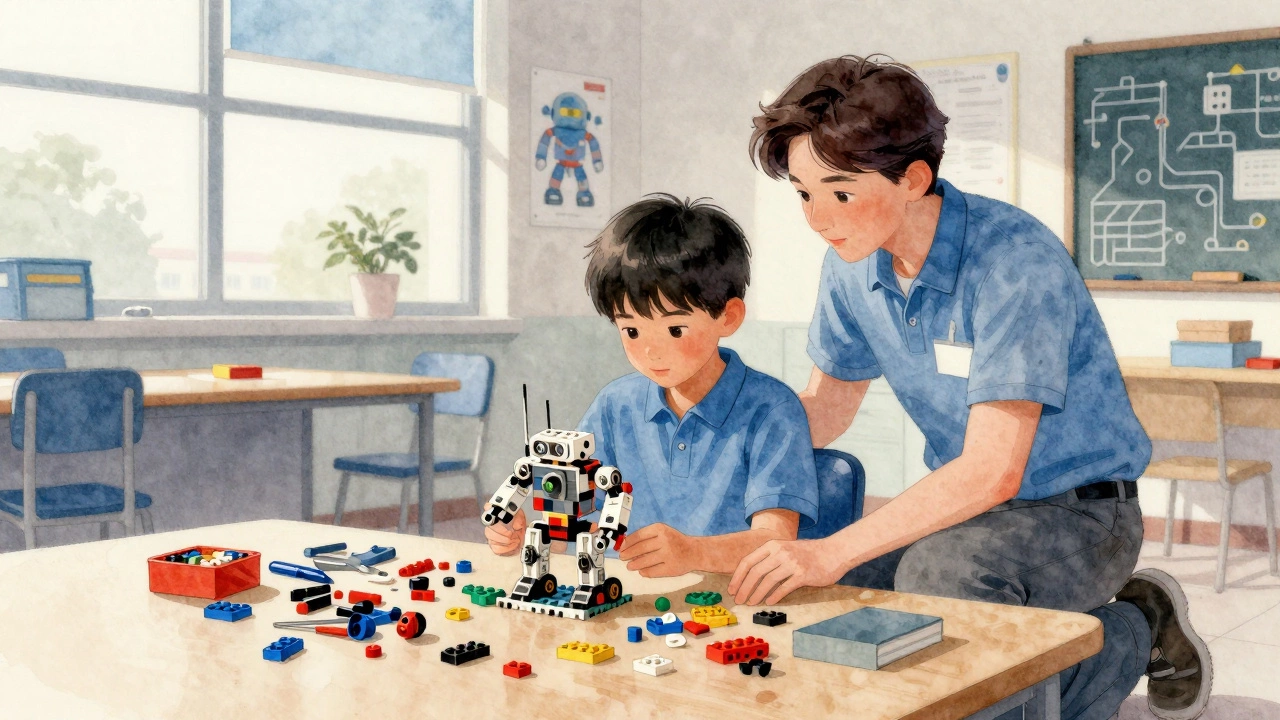
Math and reading matter, but they’re not the whole picture. After-school clubs teach kids how to work in teams, manage their time, handle failure, and lead others. A kid in a robotics club learns patience when a robot won’t move. A kid in drama learns how to project their voice and read an audience. A kid in a gardening club learns responsibility by watering plants every day.A 2023 study by the New Zealand Ministry of Education tracked over 1,200 students in after-school programs for two years. Those who attended regularly showed a 27% improvement in self-reported confidence and a 19% increase in problem-solving skills compared to peers who didn’t participate. These aren’t vague improvements-they show up in how kids speak up in class, ask for help, or stick with a hard assignment.
They Build Belonging
School can feel big and impersonal. In a class of 30, it’s easy to feel invisible. After-school clubs are different. They’re small. They’re consistent. You see the same people every Tuesday and Thursday. You know their names, their jokes, their quirks.For kids who struggle to fit in-whether because they’re shy, new to the country, have learning differences, or just don’t click with their grade-level peers-clubs become a second family. A boy who doesn’t talk in class might be the star of the chess club. A girl who feels left out at lunch might find her people in the art club. These connections don’t show up on report cards, but they’re the reason some kids keep showing up to school at all.
Exposure to New Ideas and Careers
Most kids don’t know what a marine biologist, a sound engineer, or a community planner does until they meet someone who does it. After-school clubs bring in local experts, parents, volunteers, and older students to share real-world skills.In one school in Porirua, a local carpenter started a weekly woodworking club. Within a year, three students from that club applied for apprenticeships. One of them, a girl who’d been told she “wasn’t good with tools,” now works full-time in a cabinet-making shop. That’s not luck. That’s exposure.
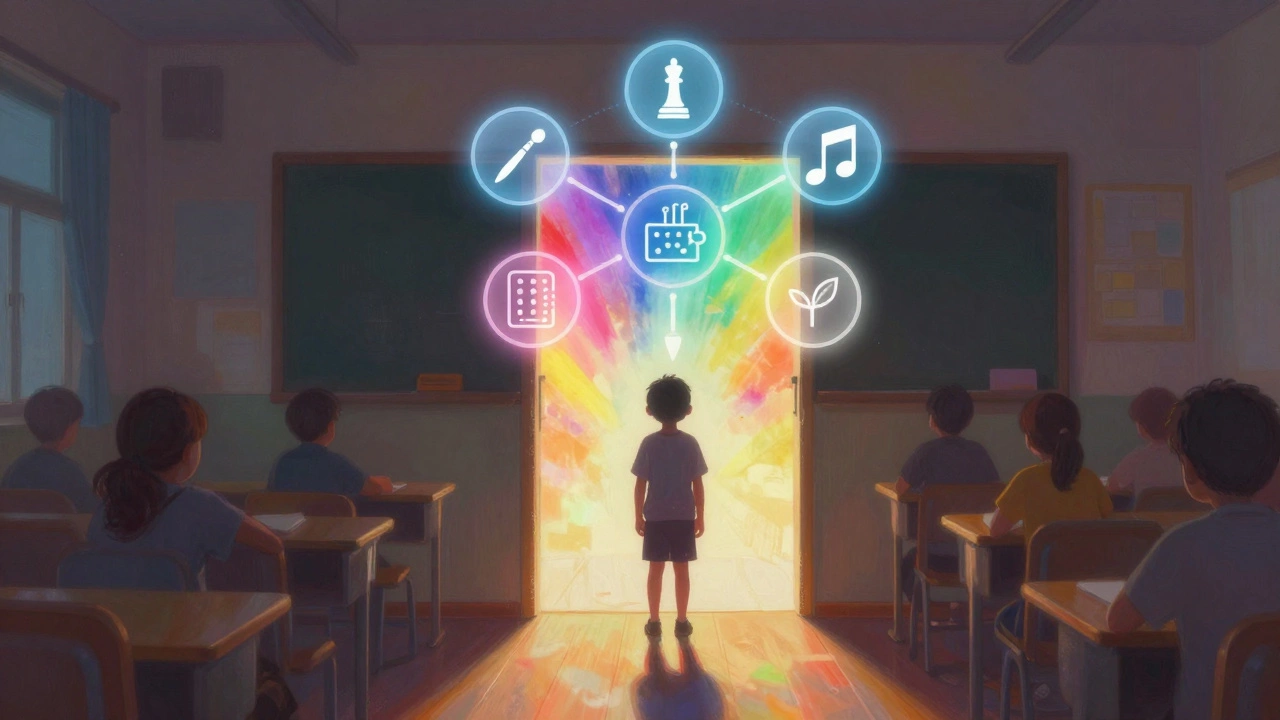
Clubs open doors kids didn’t even know existed. A coding club might lead to a tech internship. A debate club might spark a passion for law. A cooking club might turn into a food business idea. These aren’t pipe dreams-they’re real pathways that start with showing up once a week.
They Help Parents Too
Let’s be honest: parenting is hard. Juggling work, bills, housework, and kids’ needs is exhausting. After-school clubs aren’t just good for kids-they’re a lifeline for families.Single parents, shift workers, and families with multiple kids rely on these programs for safe, supervised care. In Wellington, the average cost of private after-school childcare is $25 an hour. Many school-run clubs cost $5 or less per session. That’s not just affordable-it’s life-changing for families on tight budgets.
And it’s not just about saving money. Parents report feeling less stressed knowing their child is engaged, safe, and learning something new after school. That peace of mind? It’s priceless.
They’re Not Just for “High Achievers”
Some people think after-school clubs are only for kids who are already good at something-top athletes, gifted musicians, straight-A students. That’s not true. The best clubs are the ones that welcome everyone.A kid who struggles with reading might thrive in a gardening club. A child with ADHD might find focus in building models. A quiet kid might shine in a storytelling circle. Clubs don’t judge. They don’t grade. They just give space for kids to try, fail, try again, and finally feel proud of something they did themselves.
That’s why the most successful programs don’t pick kids-they let kids pick them. Letting children choose their own club increases participation by 40%, according to research from the University of Auckland. When kids feel ownership, they stick with it.
What Makes a Good After-School Club?
Not all clubs are created equal. Here’s what actually works:- Consistency-same day, same time, same leader every week. Kids need predictability.
- Low pressure-no tryouts, no rankings, no forced performances.
- Real tools-real paint, real wood, real code, real instruments-not just worksheets.
- Adults who care-not just volunteers who show up to kill time, but people who listen and remember names.
- Connection to school-clubs that tie into what kids are learning in class (like a science club after a biology unit) boost retention.
The clubs that fade away are the ones that feel like an extra chore. The ones that last are the ones kids beg to join.
What If Your School Doesn’t Have Clubs?
You don’t need a big budget to start something. A parent with a guitar and two hours a week can start a music circle. A retired teacher can lead a book club. A local baker can run a cookie-decorating session.Start small. Ask kids what they’d like to do. Look for volunteers in the community-libraries, sports clubs, churches, even local businesses often want to give back. A simple flyer on the school gate and a sign-up sheet can be enough to get 15 kids interested.
One school in Masterton started with just a weekly Lego club. Two years later, they had robotics, gardening, and a student-run podcast. It didn’t take funding-it took someone who cared enough to say, “Let’s try.”
It’s Not a Luxury. It’s a Necessity.
After-school clubs aren’t extras. They’re essential. They’re where kids learn to be human-not just smart. They’re where confidence is built, not tested. Where friendships are forged, not forced. Where potential isn’t measured by grades, but by how much a kid lights up when they’re doing something they love.In a world that’s getting faster, noisier, and more isolating, after-school clubs are quiet places where kids can just be. And that’s worth everything.
Are after-school clubs only for academic subjects?
No. While some clubs focus on reading, math, or science, the most impactful ones are often creative, physical, or social. Art, drama, gardening, cooking, coding, chess, and even pet care clubs help kids build different kinds of skills. Emotional intelligence, teamwork, and creativity matter just as much as test scores.
How much do after-school clubs cost?
Many school-run clubs cost between $2 and $10 per session, sometimes less if there’s funding or donations. Some are completely free, especially if run by volunteers or community groups. Private providers can charge more, but public schools and community centers usually keep costs low to ensure access for all families.
Can kids with special needs join after-school clubs?
Yes, and they should. The best clubs are inclusive by design. Many schools work with support staff to adapt activities so every child can participate. A child with autism might thrive in a structured art club. A child with mobility challenges might love a storytelling or board game group. Inclusion isn’t an add-on-it’s the goal.
What if my child doesn’t want to join anything?
It’s normal. Some kids need time. Don’t push. Instead, talk to them about what they enjoy-do they like being outside? Drawing? Building things? Then find a club that matches that interest. Sometimes, just watching a session or joining for one week is enough to spark interest. The key is letting them choose, not forcing them.
Do after-school clubs help with homework?
Some do, but that’s not their main purpose. Homework help clubs exist, but most clubs focus on enrichment-not academics. That’s okay. Kids need time to play, create, and explore without pressure. The skills they learn in those clubs-focus, patience, problem-solving-often help them with homework more than extra drills ever could.
How can I start a club at my child’s school?
Talk to the school office or principal. Ask if there’s a committee for extracurriculars. Then gather interest-ask other parents and kids what they’d like. Start with a simple idea: a weekly 30-minute session, one day a week. Find a volunteer (you, a teacher, a grandparent). Use the school’s space. Keep it simple. The first club doesn’t need to be perfect-it just needs to exist.