
Charity Leadership Eligibility & Team Planner
Step 1: Legal Eligibility Check
Answer these questions to see if you are legally barred from acting as a charity trustee.
Quick Guide: Can You Start a Charity?
- Individuals: Anyone of legal age (usually 18+) can typically lead a charity, provided they aren't disqualified by law.
- Groups: A small team of founders (trustees) is usually required to ensure accountability.
- Qualifications: No specific degree is needed, but skills in finance, law, or management are huge assets.
- Legal Standing: You must not be an undischarged bankrupt or have a history of serious fraud.
The Legal Definition of a Charity Leader
Before you start printing flyers, you need to understand that Charity Governance is the system of rules, practices, and processes by which a non-profit organization is directed and controlled . You don't just "run" a charity like a lemonade stand; you manage it on behalf of the public. This means you are usually acting as a Trustee is a person who holds legal title to assets for the benefit of another, specifically the public or a designated cause in a non-profit context .
In most jurisdictions, the law doesn't care if you've never managed a budget before. What it cares about is your fiduciary duty. This is a fancy way of saying you must act in the best interest of the charity, not yourself. If you use charity funds to buy a personal jet, you're not "running a charity"-you're committing fraud.
Who is Legally Barred from Leading?
While the door is open to almost everyone, there are some hard lines. You generally cannot be a trustee or a director of a charity if you fall into these categories:
- Undischarged Bankrupts: If you can't manage your own finances to the satisfaction of the court, the government assumes you can't manage public donations.
- Convicted Felons: Specifically those convicted of crimes involving dishonesty or deception. If you were caught embezzling from a previous employer, you're likely barred.
- Court Orders: Anyone specifically banned by a judge from acting as a company director or charity trustee.
If you're unsure, the best move is to check with the regulator in your region. For example, in New Zealand, Charities Services is the government agency responsible for registering and regulating charities to ensure they operate for the public benefit provides clear guidelines on who can be a registered officer.
The Ideal Team Mix: Who You Actually Need
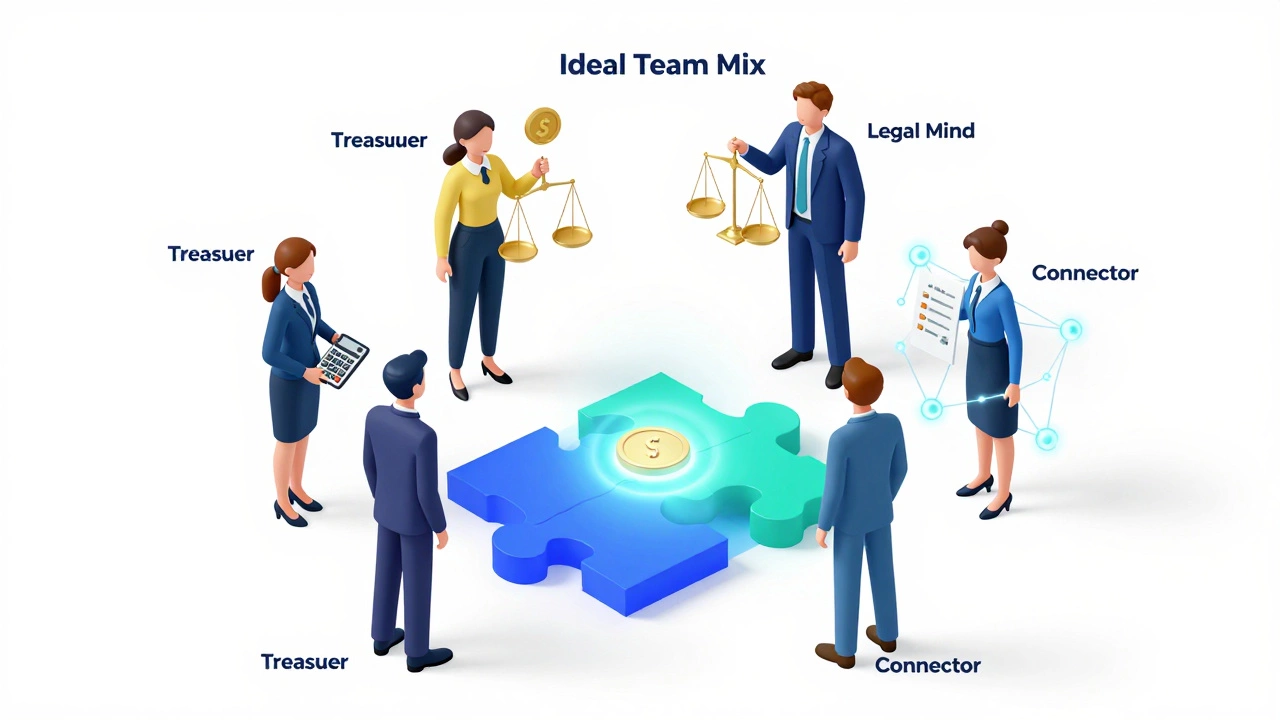
You can legally run a charity with just a few people, but trying to do everything yourself is a recipe for burnout. A high-functioning board usually isn't made of people with the same skills, but people with complementary ones. Think of it as a puzzle.
| Role | Key Skill | Why They Matter |
|---|---|---|
| The Treasurer | Accounting / Finance | Ensures the books are clean and tax filings are on time. |
| The Legal Mind | Law / Compliance | Keeps the charity from accidentally breaking local regulations. |
| The Operator | Project Management | Turns the vision into actual events and delivered services. |
| The Connector | Networking / PR | Brings in donors and raises awareness in the community. |
If you are a passionate advocate for a cause but hate spreadsheets, you don't have to avoid running a charity. You just need to find a Treasurer is the board member responsible for overseeing the financial accounts and reporting of a non-profit organization who loves them. The magic happens when the passion of the founder meets the discipline of a professional.
Choosing Your Legal Structure
Who can run a charity also depends on how the charity is structured. You have a few main options, and each changes the "who" and "how" of leadership.
First, there is the Charitable Trust is a legal entity where assets are held by trustees for a specific charitable purpose, common in common-law jurisdictions . Here, the trustees are the bosses. They hold the legal title to the property or money and must follow a trust deed strictly.
Then there's the Company Limited by Guarantee is a non-profit company structure where there are no shareholders, and members guarantee a small amount if the company winds up . This is popular for larger organizations because it limits the personal liability of the people running it. In this setup, you have a board of directors who manage the day-to-day operations.
Finally, you have the Unincorporated Association is a simple group of people who agree to work together for a common goal without formal legal registration . This is great for a small neighborhood cleanup group, but risky for anything involving large sums of money because the individuals are personally liable for debts.
Managing the Shift from Founder to Leader
One of the biggest hurdles for people starting a charity is the psychological shift. When you start, you're a "founder"-you have the vision, the drive, and the ideas. But as the organization grows, you must become a "governor." This means stepping back from doing all the work and instead focusing on oversight.
A common mistake is the "Founder's Syndrome," where the person who started the charity refuses to let anyone else make decisions. This actually puts the charity at risk. Regulators and donors want to see a healthy board with a diversity of opinions, not a one-man show. If you're the only person who knows where the bank passwords are kept, you're a bottleneck, not a leader.
To avoid this, implement a conflict of interest policy early on. This ensures that no one in charge is making decisions that unfairly benefit themselves, their family, or their business. It sounds bureaucratic, but it's the only way to maintain public trust.

Practical Steps to Get Started
If you've decided you're the right person to lead, don't just dive in. Follow these steps to ensure your foundation is solid:
- Define Your Public Benefit: You can't just start a "club." You must prove your charity helps a specific group or solves a public problem (e.g., providing meals for the homeless or protecting a local forest).
- Recruit Your Core Team: Find 2-3 people who believe in the cause but bring different skills. Look for the "Treasurer" and "Legal Mind" mentioned earlier.
- Draft Your Governing Document: This is your constitution. It defines who can vote, how trustees are appointed, and what happens to the money if the charity closes.
- Register with the Authorities: Depending on your country, this might be the IRS in the US, the Charity Commission in the UK, or Charities Services in NZ.
- Set Up a Separate Bank Account: Never, ever mix charity money with your personal funds. This is the fastest way to get investigated for fraud.
Common Pitfalls to Avoid
Many new charity leaders fall into the same traps. First is the "Passion Gap." They spend all their time on the cause and zero time on the paperwork. Remember: the government doesn't care how many trees you planted if you didn't file your annual return. Compliance is a part of the mission.
Second is the "Volunteer Trap." Relying solely on volunteers for critical roles (like accounting) can be dangerous. While volunteers are the heartbeat of any non-profit, some roles require professional-grade accuracy. If your bookkeeping is a mess, you won't be able to get grants from larger foundations.
Finally, avoid the "Over-Promise". Many founders claim they can solve a massive global problem with a small local team. Be specific. Instead of "Ending World Hunger," try "Providing 500 healthy lunches a week to students in South Wellington." Specificity attracts donors because they can see the direct impact of their money.
Do I need a degree to be a charity trustee?
No, there is no legal requirement to have a university degree to run a charity. What matters is your ability to fulfill your legal duties, act with integrity, and contribute a skill or perspective that helps the organization achieve its goals.
Can I be paid to run my own charity?
It depends on the laws of your country and your charity's governing documents. In many places, trustees are volunteers and cannot be paid. However, you can often employ a CEO or Manager (who might be the founder) to handle daily operations, provided the pay is reasonable and approved by the board to avoid conflicts of interest.
What happens if the charity goes into debt?
If the charity is a Company Limited by Guarantee or a registered incorporated society, the directors/trustees generally have limited liability. This means they aren't personally responsible for the debts. However, if the debt was caused by gross negligence or fraud, the individuals can be held personally liable.
Can I run a charity if I have a criminal record?
Not necessarily, but it depends on the crime. Most regulators only ban people convicted of crimes involving dishonesty, theft, or fraud. However, if your charity works with children or vulnerable adults, you will need a specific background check (like a police vet) to ensure you are fit for that specific environment.
How many people do I need to start a charity?
While some small associations can be started by two people, most regulators recommend a minimum of three trustees. This ensures that no single person has absolute control over the funds and allows for a balanced voting process when making big decisions.
Written By Leland Ashworth

I am a sociologist with a passion for exploring social frameworks, and I work closely with community organizations to foster positive change. Writing about social issues is a way for me to advocate for and bring attention to the significance of strong community links. By sharing stories about influential social structures, I aim to inspire community engagement and help shape inclusive environments.
View all posts by: Leland Ashworth

Categories
© 2026. All rights reserved.