Religious Giving Calculator
How Much Do You Give?
Find out how much you might give based on your religious tradition and income.
Your Potential Giving
Did you know? According to the 2023 Charities Aid Foundation study, Muslims give the highest percentage of income to charity (33%), followed by Christians (around 10-15%), and Jews (22% more likely to give regularly than non-religious individuals).
How This Compares
When people ask which religion is the most charitable, they’re often looking for a simple answer - but the truth is messier than rankings suggest. It’s not about which faith has the most followers, or which one makes the biggest headlines. It’s about how much people actually give, how consistently they give, and what they give for.
Let’s cut through the noise. In 2023, a study by the Charities Aid Foundation (CAF) tracked charitable behavior across 114 countries. They didn’t just look at money. They looked at time, money, and helping strangers. The results? Muslims gave the highest percentage of their income to charity - 33% on average. That’s more than double the global average of 15%.
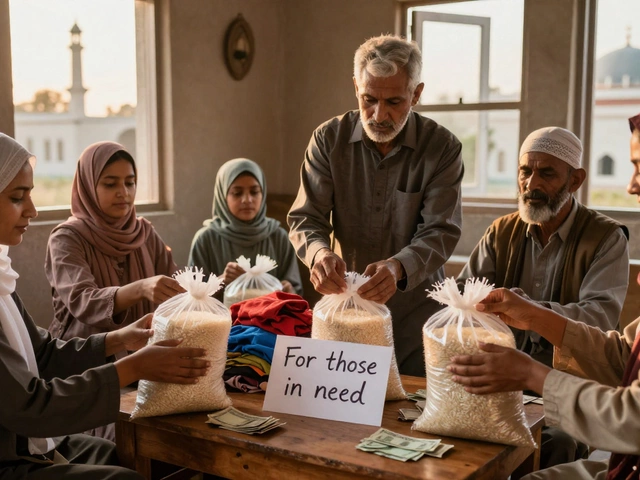
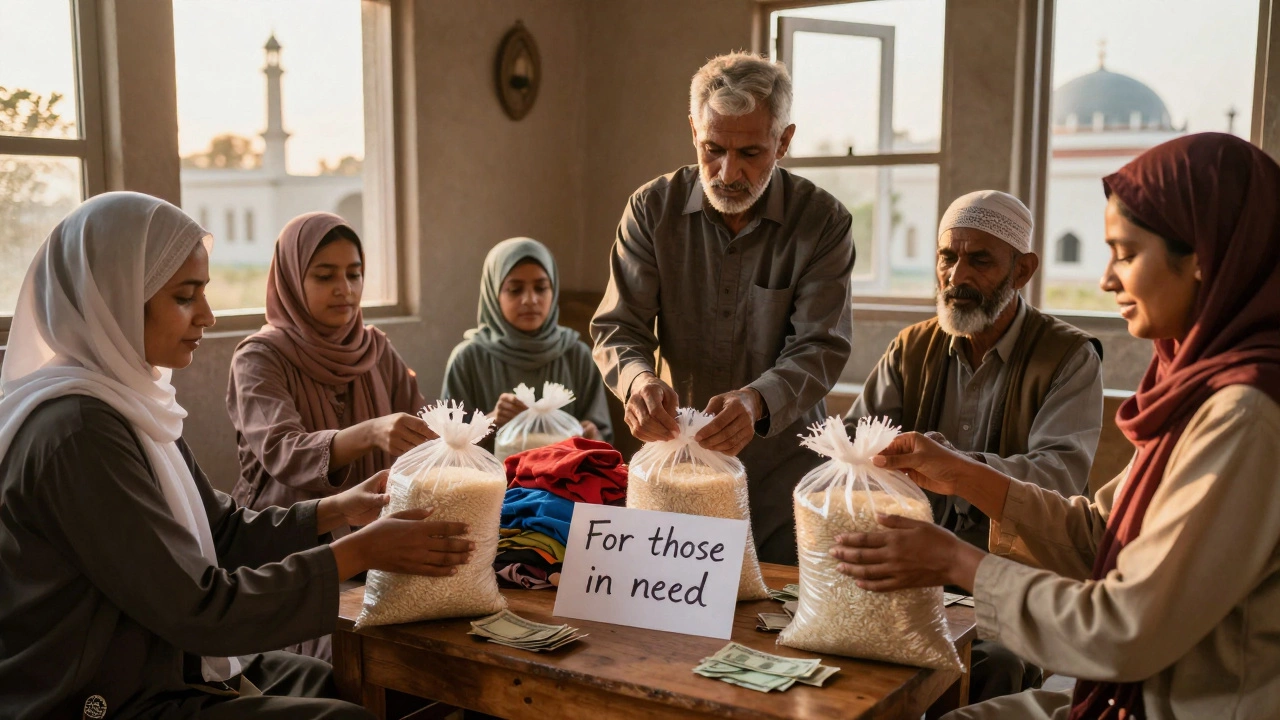
That doesn’t mean Christians don’t give. They do - a lot. In the U.S., 72% of churchgoers donate to their congregations each year, and many give outside too. But here’s the key difference: Muslims give through zakat, a mandatory act of worship. Every financially able Muslim is required to give 2.5% of their savings annually. It’s not optional. It’s built into the faith. And it’s not just about money - it includes food, clothing, even helping someone find a job.
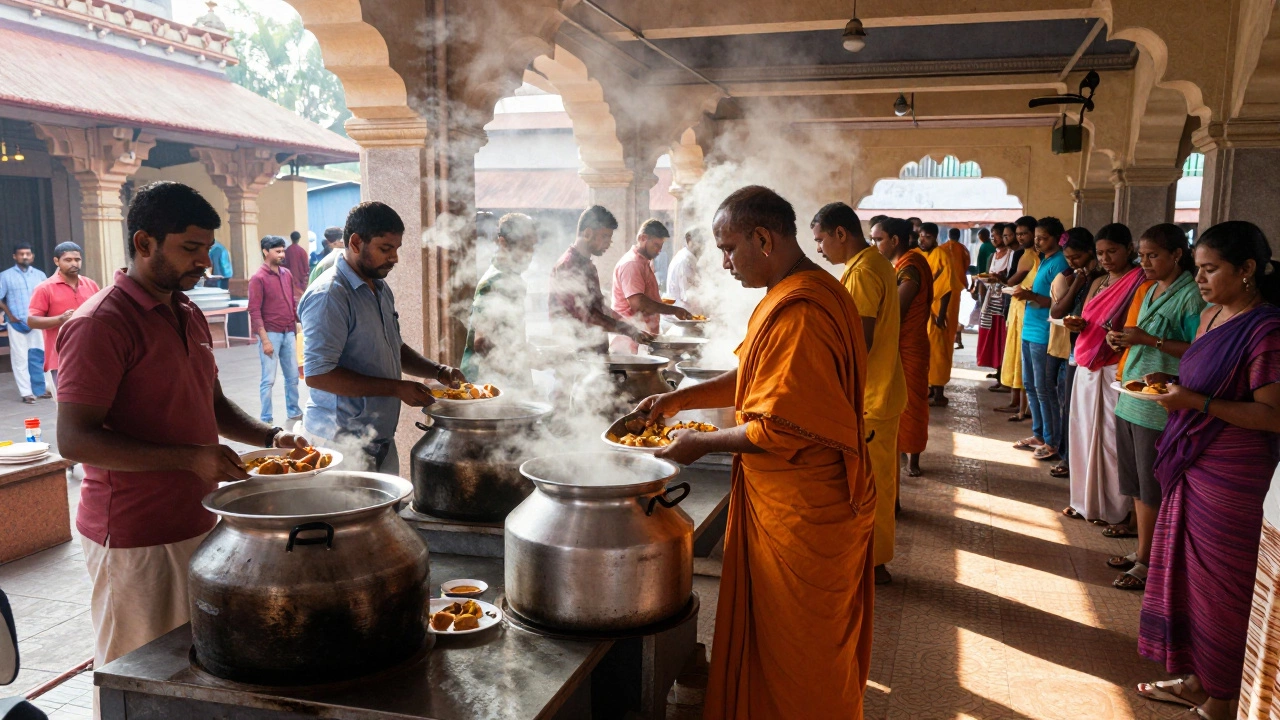
What about Hindus? In India, temple-based charity is massive. The Tirumala Tirupati Devasthanams (TTD), one of the richest temples in the world, distributed over $1.2 billion in aid last year - from free meals to medical care. That’s not a nonprofit. That’s a religious institution running one of the largest social service networks on Earth.
Buddhists? They don’t have a formal giving system like zakat, but their culture of generosity is deeply woven into daily life. In Thailand and Sri Lanka, monks go out every morning to collect alms. Laypeople offer food, money, even medicine. It’s not a fundraiser. It’s a spiritual practice. And in refugee camps across Southeast Asia, Buddhist groups are often the first to set up kitchens and shelters.
Now, let’s talk about Christians. In the U.S., faith-based charities run 1 in 4 food banks. The Salvation Army alone served over 30 million meals last year. Catholic Charities USA gave out $2.3 billion in aid. But here’s the catch: much of that giving is tied to institutional infrastructure. A church has a building, a staff, a system. That makes it efficient - but it also means giving is often channeled through organizations, not directly from person to person.
And Jews? Tzedakah - rightousness, not charity - is a core principle. It’s not optional. It’s not a suggestion. It’s a duty. Jewish communities have built networks of mutual aid for centuries. From burial societies to interest-free loan funds, the system is designed to prevent people from falling through the cracks. In Israel, over 80% of Jewish households give regularly to causes - even those with modest incomes.
So who gives the most? The data says Muslims, by percentage of income. But that’s only one piece. The real story is in the why.
Why faith drives giving - not just obligation
Religious giving isn’t just about rules. It’s about identity. When you believe your wealth is a gift - not a reward - you’re more likely to see it as something to pass on. A 2022 study from the University of Notre Dame found that people who believe their success comes from divine blessing are 40% more likely to give to strangers in need.
That’s why religious communities often outperform secular ones in crisis response. After the 2023 earthquake in Turkey and Syria, mosque-based relief teams were on the ground within hours. They had food, water, and tents ready because they’d trained for this. They didn’t wait for government approval. They didn’t file grant applications. They acted.
Compare that to a typical nonprofit. It takes weeks to mobilize. Fundraising. Logistics. Legal paperwork. Religious groups? They’ve been doing this for centuries. Their networks are local. Their trust is deep. Their motivation? Not tax deductions. Not social media likes. It’s faith.
What gets measured - and what doesn’t
Most charity rankings only count money. But what about time? What about cooking meals for the sick? Driving elderly neighbors to appointments? Teaching kids to read after dark? These aren’t recorded in donor databases. But they’re the backbone of religious charity.
In Nairobi’s Kibera slum, Muslim women run daily soup kitchens out of their homes. In rural Guatemala, Catholic parishioners pool money to fix school roofs. In Vancouver, Buddhist volunteers deliver groceries to isolated seniors every Tuesday. These aren’t headline events. They’re quiet, daily acts. And they’re everywhere.
Even in New Zealand - where church attendance is low - faith groups run 30% of all food banks. In Wellington alone, the Sikh community runs a free langar (community kitchen) every Sunday. No one asks for ID. No one checks income. Just food. For anyone.
The myth of ‘the most charitable’
There’s no single winner. And chasing a ranking misses the point. The real question isn’t “Which religion gives the most?” It’s “What makes people give - and how can we learn from it?”
Here’s what we know for sure:
- Religious giving is often mandatory - not optional - creating consistent, predictable support.
- It’s community-driven - not top-down. Money moves through networks of trust, not bureaucracies.
- It’s invisible - much of it happens outside official records.
- It’s long-term - not one-time donations. It’s built into daily life.
If you want to build a more charitable society, don’t look for the biggest donor. Look for the systems that make giving automatic, personal, and meaningful.

What secular charities can learn
Nonprofits spend millions on marketing. Religious groups spend almost nothing. Why? Because their donors don’t need to be convinced. They already believe.
Secular organizations could learn a lot from:
- Embedding giving into identity - not just campaigns.
- Using local networks - not just apps and websites.
- Making giving habitual - not event-based.
The Sikh langar in Wellington? It’s been running for 18 years. No website. No fundraising emails. Just a kitchen, a team, and a promise: “Anyone who’s hungry, eats here.” That’s the kind of trust no ad campaign can buy.
Is it true that Muslims give the most to charity?
Yes, according to the Charities Aid Foundation’s 2023 Global Giving Index, Muslims gave the highest percentage of their income to charity - averaging 33% across 114 countries. This is largely driven by zakat, a mandatory form of giving in Islam that requires financially capable Muslims to donate 2.5% of their savings annually. The giving includes money, food, and practical help, and it’s distributed locally and globally.
Do Christians give more than Muslims in total dollars?
In absolute dollar terms, Christians in wealthy countries like the U.S. give more overall because of population size and income levels. For example, U.S. churches collected over $130 billion in donations in 2023. But when measured as a percentage of income, Muslims consistently give more. A U.S. Christian giving 5% of their income is still giving less than the global average for Muslims, who give 33% on average.
Why don’t we hear more about Hindu charity?
Hindu charity is massive but often invisible to Western media. Large temple complexes like Tirumala Tirupati Devasthanams in India distribute over $1 billion annually in free meals, medical care, and education. This isn’t charity as nonprofits define it - it’s religious duty. The scale is enormous, but because it’s tied to temples and not formal NGOs, it rarely shows up in global rankings.
Does religion make people more charitable than non-religious people?
Studies show religious people are more likely to give regularly and to strangers, not just to their own communities. A 2021 study in the Journal of Empirical Theology found that religious individuals were 22% more likely to help someone they didn’t know, even after controlling for income, education, and age. The difference isn’t just in money - it’s in frequency and consistency.
Can secular organizations copy religious giving models?
Yes - but not by copying rituals. They can copy the structure: embedding giving into daily life, using trusted local networks, and making support automatic. For example, food banks that partner with neighborhood mosques or temples often see higher volunteer turnout and fewer administrative hurdles. The lesson isn’t religion - it’s community trust.
If you’re looking for the most charitable religion, don’t search for the top of a list. Look at the kitchen in the back of the temple, the table set up in the mosque courtyard, the weekly meal delivered by a monk in a robe. That’s where charity lives - not in spreadsheets, but in action.