
Gala ROI Calculator
Find out if your gala could be as profitable as the data suggests. Based on 2024 research, top-performing galas generate 5.30x return on every dollar spent. Calculate your potential profit using real-world revenue models.
Gala Inputs
Your Potential Results
How Your Gala Compares
| Event Type | ROI (Return per $1) | Best For |
|---|---|---|
| Charity Gala | $5.30 | Major donors, corporate sponsors |
| Benefit Concert | $3.50 | Local artists, music fans |
| Corporate Challenge | $2.80 | Employee engagement |
| Fun Run | $2.10 | Community visibility |
| Bake Sale | $1.20 | Small donations, local presence |
When you’re running a charity, every dollar counts. But not all fundraising events are created equal. Some drain your team’s energy for little return. Others bring in thousands with minimal effort. So what’s the most profitable fundraising event? The answer isn’t a single type-it’s the one that matches your audience, your resources, and your ability to execute. But if you’re looking for the highest average return on investment, the data points to one clear winner: the charity gala.
Why Charity Galas Dominate in Profitability
Charity galas-formal dinners, auctions, and entertainment nights-consistently outperform other events in net profit. A 2024 study by the Association of Fundraising Professionals tracked 1,200 U.S. and Canadian nonprofits. Galas averaged $5.30 raised for every $1 spent. That’s a 430% return. Compare that to bake sales ($1.20 per dollar) or car washes ($0.80). Even fun runs, often seen as reliable, only hit $2.10 per dollar spent.
What makes galas so powerful? It’s not just the ticket price. It’s the layered revenue model. You get:
- Ticket sales ($100-$500 per person)
- Live and silent auctions (items donated, sold at 3-10x retail value)
- Corporate sponsorships ($5,000-$50,000 per table)
- Donation appeals during the event (often triggered by emotional storytelling)
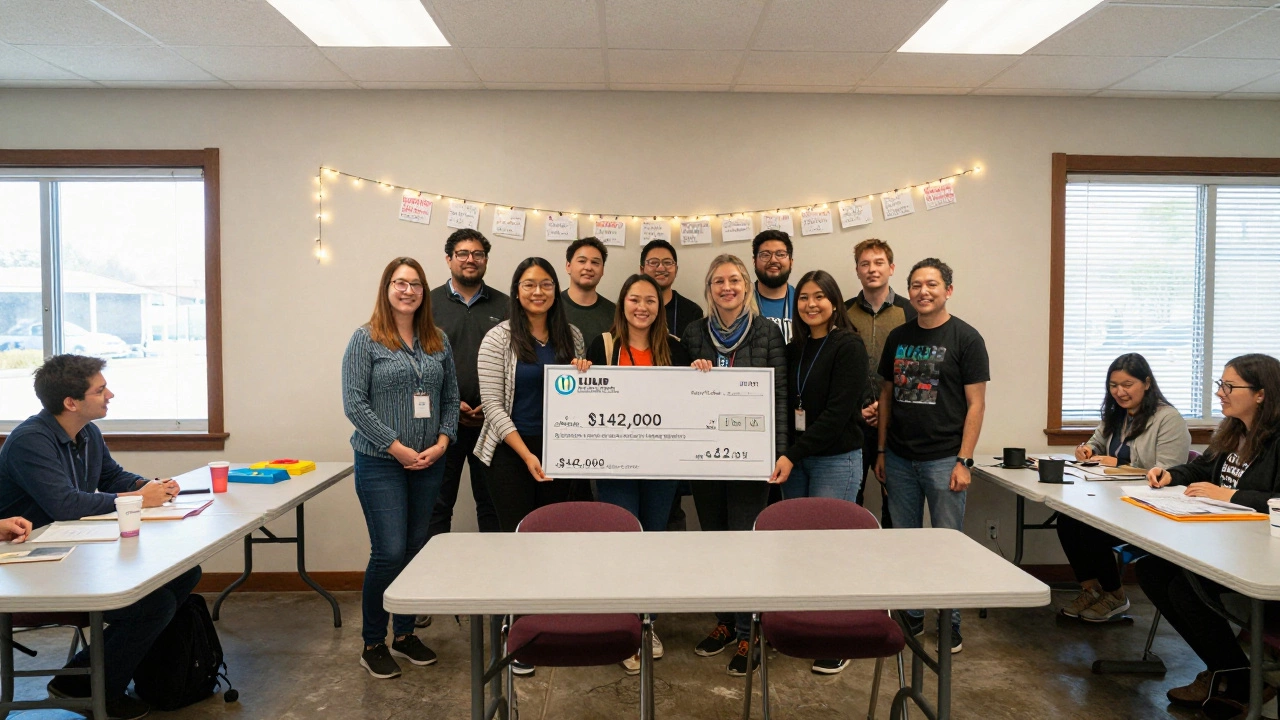
Take a small nonprofit in Wellington that raised $180,000 at its annual gala last year. They spent $38,000 on venue, catering, and printing. Net profit? $142,000. That’s 374% ROI. The same group ran a 5K walkathon the next month. It brought in $75,000-but cost $45,000 to organize. Net? $30,000. The gala made nearly five times more with half the volunteer hours.
What Makes a Gala Work (And What Can Kill It)
Not every gala turns a profit. Many fail because they treat it like a party, not a fundraising engine. The key is control over three things: costs, donors, and timing.
Cost control is non-negotiable. Don’t rent a five-star hotel ballroom if your budget is under $50,000. Look for community centers, museums, or even a university auditorium. Many are willing to donate space if you promote their name. Catering? Use a local restaurant’s banquet package instead of a luxury caterer. Most guests won’t notice the difference if the food is good.
Donor targeting is everything. Galas work best when you invite people who’ve given before-or who have the means to give big. A list of 150 past donors is better than 300 random names. Send personalized invitations. Call them. Ask them to bring a friend who might be able to contribute. The goal isn’t attendance-it’s giving.
Timing matters. Hold your gala between September and November. That’s when people are thinking about year-end giving. Avoid holidays, exam season, or major local events. One Auckland charity lost $22,000 in potential revenue because they scheduled their gala on the same night as the NZ International Arts Festival.

Alternatives That Come Close
Galas aren’t the only option. If a formal dinner doesn’t fit your brand, here are other high-performing events:
- High-end auction events (no dinner, just bidding): Average ROI of 410%. Great for art galleries, museums, or cultural groups. Requires strong donor relationships and donated items.
- Benefit concerts: If you have access to local musicians or bands, ticket sales + merchandise can hit $3.50 per dollar spent. The key is getting a headliner-even a well-known local artist.
- Corporate challenge events: Companies sponsor teams to complete a physical challenge (e.g., 100km cycling, 24-hour dance marathon). They donate $100-$500 per participant. Often nets $2.80 per dollar spent. Low overhead, high engagement.
Walkathons and fun runs? They’re great for visibility and community spirit. But they’re not profit machines. The costs add up: permits, security, T-shirts, water stations, medical staff, and insurance. Many groups break even-or lose money. If you do one, make sure it’s sponsored by a big local business that covers all major costs.
What Doesn’t Work (And Why)
Some events look easy but eat your budget alive:
- Bake sales: Labor-intensive, low ticket value. Even a big one might net $500 after costs.
- Car washes: Weather-dependent, high labor cost, low profit margin. One group in Christchurch spent $800 on soap, buckets, and water rights-and made $950. Net: $150.
- Online crowdfunding alone: It’s not an event. Without a live component, donation fatigue sets in fast. Crowdfunding works best as a supplement to a live event.
- Lotteries or raffles: Legal restrictions in New Zealand make these hard to run. Plus, most people won’t pay $20 for a 1 in 500 chance.
Don’t waste time on events that require more than 50 volunteer hours for under $2,000 net profit. That’s not fundraising. That’s a part-time job.
How to Build a Profitable Gala (Step by Step)
Here’s how to run a gala that doesn’t just break even-it thrives:
- Set a goal: Aim for at least 3x your expenses. If you want $100,000 net, budget $30,000 in costs.
- Secure sponsors early: Approach local businesses with a sponsorship package. Offer logo placement, a table, and a speaking slot.
- Collect auction items: Ask for donations from local artists, restaurants, travel agencies, and spas. Even a $500 gift card can sell for $1,200 if marketed right.
- Choose a compelling story: Have one real beneficiary speak for 5 minutes. Not a staff member. Not a board chair. A person whose life changed because of your work.
- Use mobile bidding: Apps like Handbid or OneCause let guests bid from their phones. Reduces chaos and increases bids.
- End with a direct ask: “We need $40,000 tonight to fund 200 meals for families in need. Will you help?” Pause. Let it sink in. Then open the paddle raise.
One Wellington group added a simple twist: they printed each guest’s name on a small card and placed it on their table. At the end, they asked people to take the card home-and donate $100 to “replace” it with a new one for someone else. 83% did. They raised $12,000 in five minutes.
Final Thought: Profit Isn’t the Only Goal-but It’s the Foundation
Yes, community building matters. Yes, awareness is important. But if your event doesn’t make money, you can’t fund your mission. A charity that loses $5,000 on a “fun” event isn’t being generous-it’s being unsustainable. The most profitable fundraising event isn’t about flash. It’s about strategy, precision, and understanding who your donors are-and what moves them to open their wallets.
If you’re planning your next event, start with the gala. Test it with a smaller version. Track every dollar. Refine. Then scale. The money you raise won’t just cover your bills-it will change lives.
What’s the average profit margin for a charity gala?
The average profit margin for a charity gala is around 75-80%. That means for every $1 spent, you raise $5-$6 net. High-performing galas can hit 85% margins when costs are tightly controlled and auction items are donated.
Can a small nonprofit run a successful gala?
Absolutely. You don’t need a big budget. One Nelson-based group raised $85,000 with just 60 guests, donated food from a local restaurant, and a silent auction of 30 items-all collected from community members. Their total cost? $18,000. The key is focusing on quality over quantity. Invite your strongest supporters, not everyone you know.
How far in advance should I plan a fundraising gala?
Start planning at least 6 months ahead. Secure your venue and key sponsors by month 2. Begin collecting auction items by month 3. Send invitations by month 4. This gives you time to follow up, build excitement, and adjust based on early responses.
Are silent auctions really worth the effort?
Yes-if done right. Silent auctions can account for 40-60% of a gala’s total revenue. The trick is having desirable items: weekend getaways, dining experiences, signed memorabilia, or services like photography or home renovations. Avoid low-value items like mugs or candles. People won’t bid on them.
What’s the biggest mistake people make with fundraising events?
Thinking the event is about the activity, not the donor. People don’t attend a gala because they want to eat dinner. They attend because they believe in your cause and want to be part of something meaningful. Your messaging, storytelling, and personal connections matter more than the hors d’oeuvres.