4-H Country Presence Checker
Find Your Local 4-H Program
4-H operates in over 80 countries worldwide. Enter your country to see if 4-H is present and find local resources.
Enter your country to see if 4-H is present
4-H in
How to Join:
When you think of youth-led change, you might picture a school club raising money for a local cause. But there’s one group that’s far bigger than any single school or city - a movement that spans over 100 countries, involves millions of young people, and has been running continuously for more than 110 years. It’s not a government program. It’s not a nonprofit funded by big donors. It’s run entirely by young people, for young people. And it’s the largest youth-run organization in the world: 4-H is a youth development organization that empowers young people through hands-on learning in agriculture, science, and leadership. Also known as 4-H Club, it was founded in 1902 in the United States and has since grown into a global network with over 6 million members.
What Makes 4-H Different?
Most youth organizations are led by adults. Teachers, coaches, or volunteers run the meetings, plan the activities, and make the decisions. But 4-H flips that model. Young people between the ages of 8 and 18 lead projects, manage budgets, train younger members, and even design national programs. Adults serve as advisors - not bosses. This structure isn’t just symbolic. It’s built into the core of how 4-H operates.
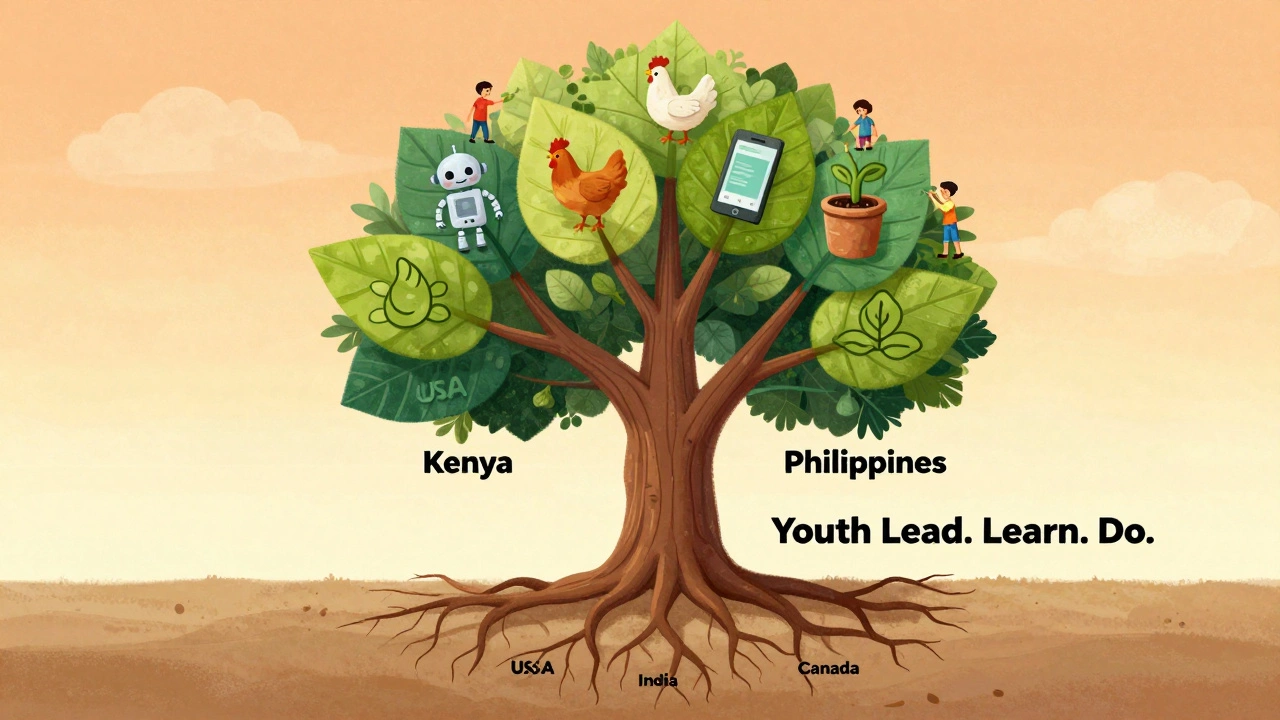
For example, in Iowa, a 15-year-old girl led a team that designed a low-cost irrigation system for local farmers. She presented it at the state fair, won a grant, and helped install it on three farms. In Kenya, a group of teens started a mobile app to connect smallholder farmers with buyers. They trained other youth in coding and now run weekly workshops. These aren’t rare stories. They’re standard in 4-H.
The organization doesn’t just teach skills - it gives real responsibility. Members choose their own projects. They set goals. They report progress. They fail. They try again. That’s how leadership is built - not through lectures, but through doing.
How Big Is It Really?
4-H’s size is hard to match. In the U.S. alone, it has over 6 million members. That’s more than the combined membership of the Boy Scouts, Girl Scouts, and YMCA youth programs. But it’s not just American. 4-H has official partnerships in over 80 countries, from Canada and Australia to Ghana and India. In some places, like the Philippines, local versions of 4-H have been adapted to fit cultural needs - using rice farming projects instead of corn, or teaching mobile phone repair instead of tractor maintenance.
The organization doesn’t count members the same way as a club. It tracks active participation. That means if a 14-year-old in Nebraska spends 10 hours a month raising chickens, building a robot, or leading a peer workshop, they’re counted. Not everyone joins a formal club. Many participate through school programs, after-school centers, or even online. That’s why estimates put total participation at over 10 million young people annually.
What Do They Actually Do?
4-H isn’t one thing. It’s hundreds of projects, all under one banner. The core areas are:
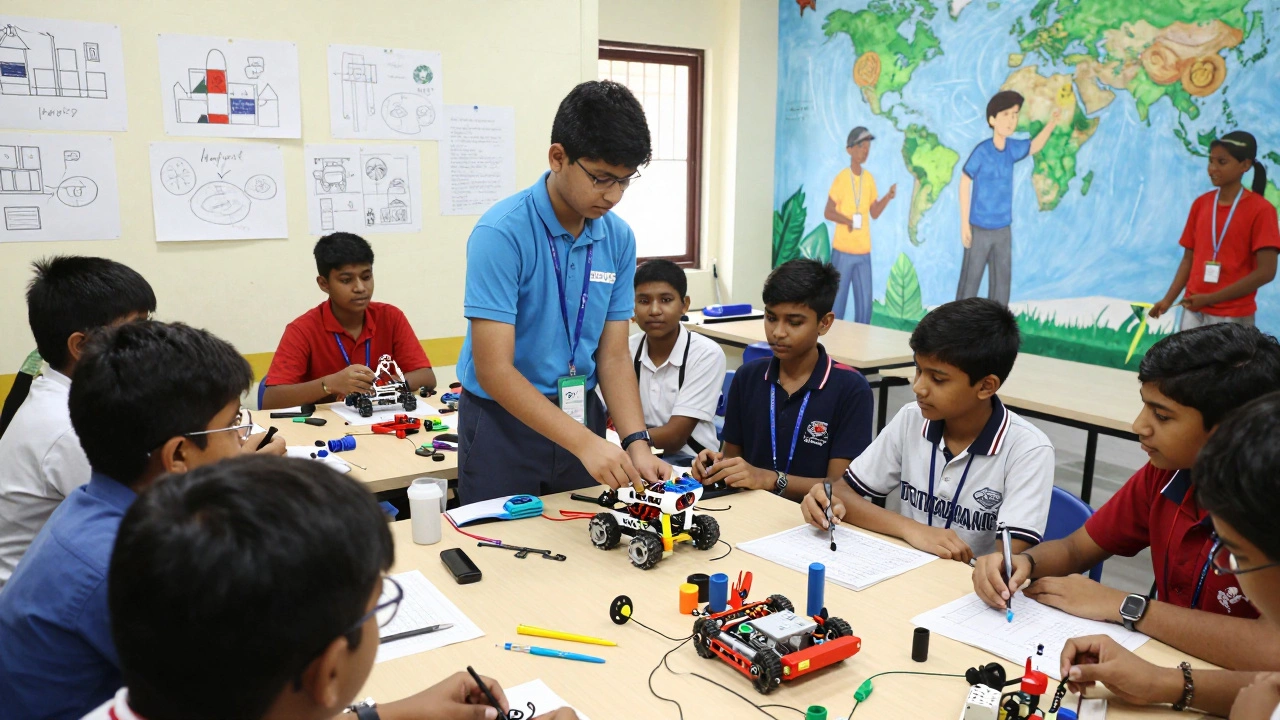
- Science and Technology - Robotics, coding, environmental science, and health research projects. In Oregon, teens built a water quality monitor that now tracks pollution in local rivers.
- Agriculture and Livestock - Raising animals, growing crops, learning sustainable farming. In Texas, a 16-year-old won a national award for using compost to restore soil after a drought.
- Leadership and Citizenship - Running meetings, organizing events, speaking at public forums. A 13-year-old in Georgia organized a youth council that helped rewrite her city’s teen curfew policy.
- Healthy Living - Nutrition, mental health, fitness. In New Zealand, 4-H groups run weekly mindfulness sessions for teens in rural areas.
Each project is self-directed. A member doesn’t need to join a specific club. They can start a project alone, with friends, or through a school. The only rule? It has to be something they care about - and they have to complete it.
Why No Other Group Comes Close
You might think of Scouts, FFA, or even youth UN programs. But none match 4-H’s scale, structure, or longevity.
- Scouts - Led by adults. Focused on outdoor skills and badges. Less emphasis on long-term project ownership.
- FFA (Future Farmers of America) - Only focused on agriculture. Smaller membership (around 1 million). Mostly U.S.-based.
- Youth UN Programs - Mostly advocacy and awareness. Rarely involve hands-on, year-round projects.
4-H is the only one that combines massive scale, global reach, youth leadership, and real-world impact. It’s not about earning a badge. It’s about building a future - one project at a time.
How Did It Start?
4-H began in the early 1900s, when rural America was struggling. Kids were leaving farms for cities. Farmers didn’t know how to teach modern techniques. So, county agents started “corn clubs” for boys and “canning clubs” for girls. They taught practical skills - planting, preserving food, animal care.
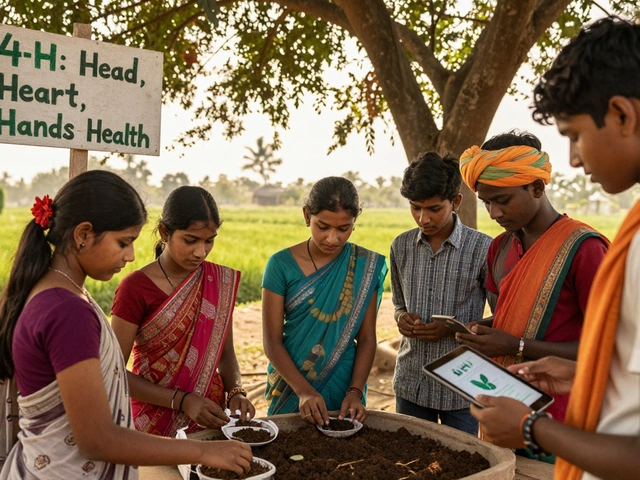
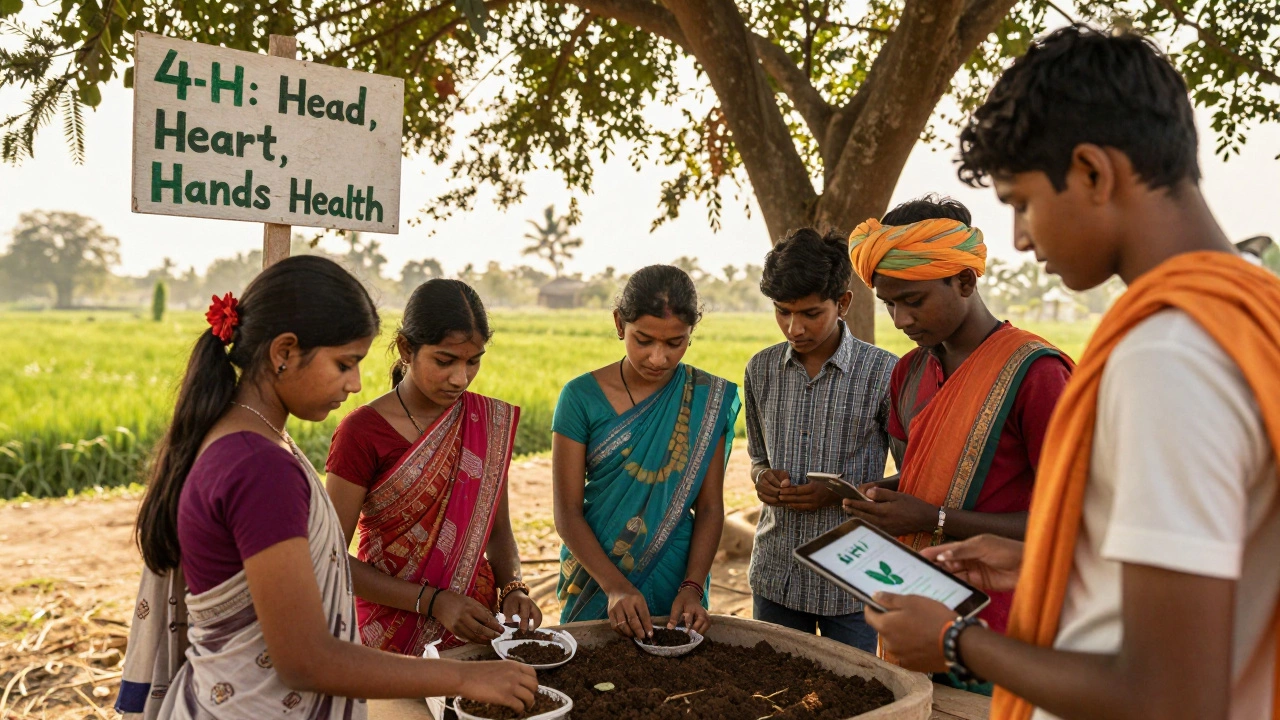
The name “4-H” came from the four Hs: Head, Heart, Hands, and Health. These weren’t just slogans. They became the foundation of every project. Use your head to plan. Use your heart to care. Use your hands to build. Use your health to stay strong.
By 1914, the U.S. government passed the Smith-Lever Act, officially funding 4-H through land-grant universities. That gave it stability. It didn’t rely on donations. It was tied to public education. That’s why it survived wars, recessions, and tech booms.
What’s Changed Over Time?
4-H didn’t stay stuck in the past. In the 1980s, it added computer science. In the 2000s, it launched robotics clubs. Today, it has programs in drone technology, climate science, and even digital storytelling.
It also became more inclusive. Originally focused on rural white families, it now reaches urban teens, Indigenous communities, refugees, and kids with disabilities. In Canada, 4-H partners with First Nations groups to teach traditional land stewardship. In the UK, it works with refugee youth to build community gardens.
The tools changed. The mission didn’t. It’s still about empowering young people to solve real problems - with their own hands.
How Can Someone Join?
You don’t need to live on a farm. You don’t need to be rich. You don’t even need to live in the U.S.
Here’s how it works:
- Find your local 4-H office. In the U.S., that’s usually through your county extension office. In other countries, search for “4-H [your country].”
- Choose a project. It can be anything: gardening, coding, public speaking, baking, animal care.
- Find a mentor. It doesn’t have to be a teacher. It could be a neighbor, a librarian, or even a parent.
- Start. There’s no application fee. No uniform. No tests.
Many schools now offer 4-H as an after-school program. Others run it through community centers. If there’s no group near you, you can start one. All you need is three other young people and an adult willing to help.
Why It Matters
There’s a quiet crisis happening: young people feel powerless. They hear about climate change, inequality, and political gridlock - and wonder what they can do. 4-H answers that question: Start small. Do something real. Lead.
It’s not about being perfect. It’s about showing up. A 12-year-old who builds a compost bin learns more about science, responsibility, and patience than any textbook can teach. A 17-year-old who organizes a food drive doesn’t just feed people - they learn how to move a community.
4-H doesn’t promise to fix the world. But it gives young people the tools to fix the part of it they can reach.
Is 4-H only for kids who live on farms?
No. While 4-H began in rural areas, it now includes urban, suburban, and online members. Projects range from robotics and coding to public speaking and mental health advocacy. You don’t need animals or land to join.
Can teens lead 4-H projects?
Yes. Teens aged 14-18 often lead clubs, train younger members, and manage budgets. Many 4-H programs have teen leadership councils that make decisions for their region.
Is 4-H only in the United States?
No. 4-H has official partnerships in over 80 countries. Some countries run their own versions under the 4-H name, while others use similar models inspired by it. The structure is always youth-led and project-based.
Do you have to pay to join 4-H?
Most 4-H programs are free or low-cost. Some charge a small fee for materials, but no one is turned away for lack of money. Funding often comes from local governments, schools, or grants.
Can I start a 4-H club by myself?
Yes. All you need is three other young people and one adult willing to serve as an advisor. You can register through your local extension office or school. Many clubs start as small groups meeting in backyards, libraries, or community centers.
What Comes Next?
If you’re interested in youth-led change, 4-H is just one example. But it’s the biggest. And its model - youth leading, learning by doing, solving real problems - is being copied everywhere. From youth climate councils in Europe to peer-led mental health groups in South Africa, the same idea is spreading: young people don’t need permission to lead. They just need a space to try.
So if you’ve ever thought, “I wish I could make a difference,” the answer isn’t waiting for someone else to act. It’s in your hands - and the next project you choose to start.