
Charitable Activity Qualifier Tool
Answer these questions to see if your activity likely qualifies as a charitable activity under standard legal frameworks.
What is the primary purpose of your activity?
Who primarily benefits from this activity?
How are profits handled?
Does the activity involve illegal acts or direct political campaigning?
You spend your Saturday morning sorting clothes at a local shelter. You feel good about it. But does that count as a "charitable activity" in the eyes of the law? The answer isn't always yes. Many people assume that any act of kindness or volunteer work automatically qualifies for tax benefits or legal protection. In reality, governments have strict definitions. If you are running an organization or planning a big event, understanding these lines is crucial.
In New Zealand and many other jurisdictions, the definition has shifted significantly in recent years. It is no longer just about helping the poor. It is about proving public benefit. This guide breaks down exactly what counts, what doesn't, and how you can ensure your efforts align with legal standards.
The Core Definition: Public Benefit
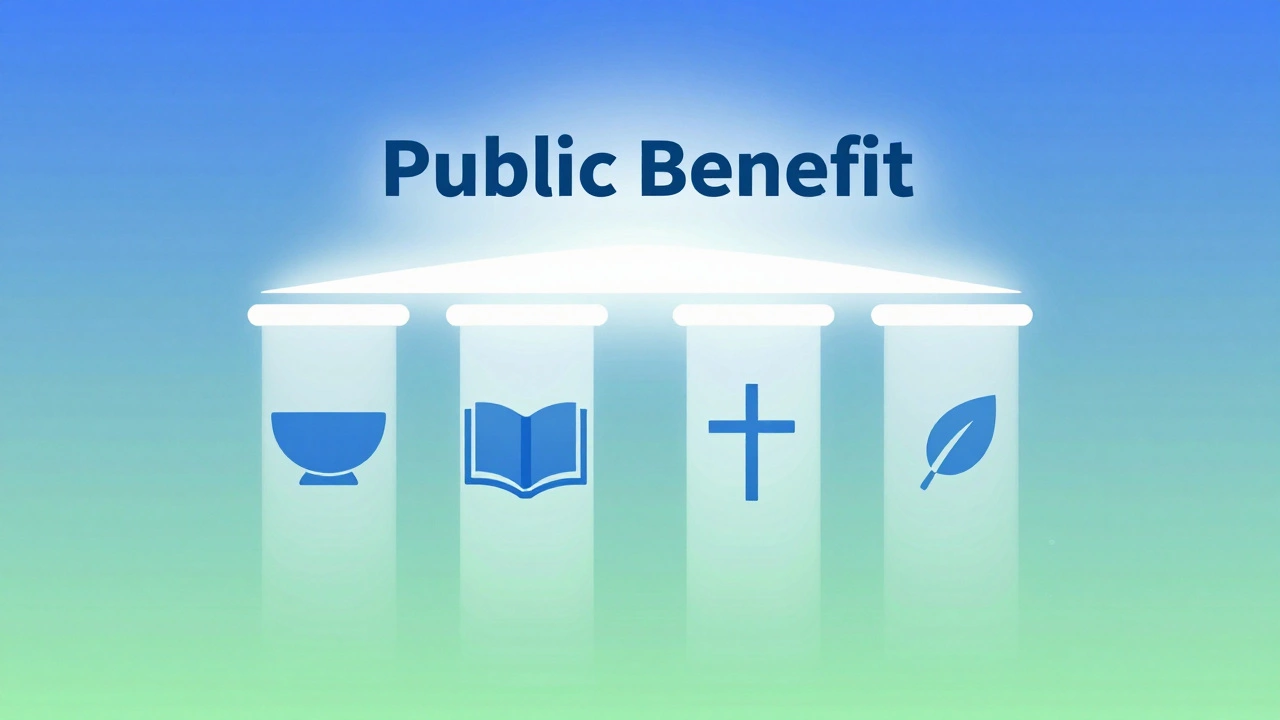
At its heart, a charitable activity must serve the public interest. This concept, known as the "public benefit test," is the gatekeeper for all charitable status. It means two things must be true. First, the purpose of the activity must be charitable. Second, the activity must actually benefit the public or a significant section of the public.
Let's look at a concrete example. Suppose you start a club for golf enthusiasts. Is this charitable? Generally, no. Why? Because the primary beneficiaries are the members themselves, not the wider community. Even if you raise money for a hospital during your games, the main activity (playing golf) is private recreation. However, if you run a program teaching underprivileged youth how to play golf to improve their health and social skills, that shifts toward a charitable activity. The key difference is who gains the most value.
Does my activity need to help everyone?
No. It does not need to help every single person in the country. However, it must benefit a sufficient section of the public. For example, a charity helping only residents of Wellington is valid. A charity helping only employees of one specific company is usually not valid unless there is a clear public benefit angle beyond just employee welfare.
The Four Heads of Charity
Historically, courts and regulators have grouped charitable purposes into four main categories. These are often called the "Four Heads." If your activity fits into one of these buckets, you are on the right track. Let's explore them with real-world scenarios.
- Relief of Poverty: This is straightforward. Activities that provide food, shelter, clothing, or financial aid to those who cannot afford basic necessities qualify. Think of soup kitchens, emergency housing funds, or debt counseling services for low-income individuals.
- Advancement of Education: This goes beyond formal schooling. It includes training, research, and the dissemination of knowledge. A coding bootcamp for unemployed adults, a museum offering free tours to students, or a library service all fall here. The key is that the education must be accessible and beneficial to the public.
- Advancement of Religion: While this seems narrow, it covers activities that promote spiritual well-being. Building places of worship, conducting religious education classes, or providing pastoral care are examples. Note that in secular societies, this head is sometimes scrutinized more closely to ensure it offers tangible public benefits like community cohesion.
- Other Purposes Beneficial to the Community: This is the catch-all category. It has expanded over time to include areas like environmental conservation, animal welfare, and the advancement of health.
It is important to note that simply having a good cause isn't enough. The activity itself must be the vehicle for that benefit. For instance, buying lottery tickets to win money for a church roof repair is not a charitable activity. The act of gambling is not inherently charitable, even if the proceeds go to a good cause.
Modern Expansions: Health and Environment
In recent decades, the definition of charitable activity has broadened. Two major areas now sit firmly within the scope of recognized charitable work: health and the environment.
Health Promotion is activities aimed at improving physical or mental well-being through prevention, treatment, or support. This includes everything from funding medical research to running mental health helplines. A group organizing a walkathon to raise awareness for depression is engaging in a charitable activity because it promotes mental health literacy and reduces stigma.
Similarly, Environmental Conservation is efforts to protect natural resources, wildlife, and ecosystems for the benefit of current and future generations. Planting trees, cleaning up beaches, or advocating for stricter pollution laws are all considered charitable. The logic here is that a healthy environment is a public good. Without it, society suffers. Therefore, protecting it serves the public benefit.
| Category | Traditional Example | Modern Example |
|---|---|---|
| Poverty Relief | Food bank distribution | Digital literacy programs for low-income seniors |
| Education | School scholarship funds | Online open-source learning platforms |
| Community Benefit | Local park maintenance | Climate change advocacy groups |
What Does NOT Count?
Understanding what is excluded is just as important as knowing what is included. Here are common pitfalls that disqualify an activity from being considered charitable.
- Political Purposes: Charities generally cannot advocate for specific political parties or candidates. They can lobby for policy changes if it aligns with their charitable mission (e.g., an environmental group lobbying for cleaner air), but they cannot seek to influence elections directly.
- Private Benefit: If the primary beneficiary is a private individual or a closed group (like a family trust or a members-only club), it fails the public benefit test.
- Illegal Acts: Any activity that violates the law cannot be charitable, regardless of the intention.
- Profit-Making: While charities can make profits, those profits must be reinvested into the charitable mission. Distributing profits to owners or shareholders makes it a business, not a charity.
Consider a scenario where a group organizes a concert. If the ticket sales go entirely to the performers and the organizers keep the rest, it is a commercial event. If the ticket sales cover costs and the surplus goes to a homeless shelter, and the concert itself raises awareness about homelessness, then it becomes a charitable activity.
The Role of Volunteer Work
Volunteering is the engine of the charitable sector. But not all volunteering is "charitable activity" in the legal sense. The distinction lies in the organization behind the work. If you volunteer at a registered charity, your work supports a charitable purpose. If you volunteer to help a neighbor move house, that is a personal kindness, not a charitable activity.
For organizations, documenting volunteer hours and activities is essential. It proves that the organization is actively pursuing its charitable aims. Regulators look for evidence of impact. Did the volunteers teach children to read? Did they clean a polluted river? Specific outcomes matter more than just showing up.

Tax Implications and Registration
In New Zealand, the Department of Internal Affairs maintains the register of incorporated societies and trusts. Being registered does not automatically mean you are a "charity" for tax purposes. You may also need to apply for charitable status with Inland Revenue (IRD). This status allows donors to claim tax credits for their gifts, which can significantly boost fundraising efforts.
To get this status, you must demonstrate that your activities meet the public benefit test. The IRD will review your constitution, your actual activities, and your financial records. They want to see that your day-to-day operations align with your stated charitable purposes. If you say you are advancing education, but you spend 90% of your budget on administrative salaries and events for staff, you will likely be rejected.
Practical Steps for Your Organization
If you are unsure whether your activity qualifies, follow these steps:
- Review Your Constitution: Does it clearly state a charitable purpose? Avoid vague language like "to do good things." Be specific: "To provide after-school tutoring for at-risk youth in Wellington."
- Assess Public Benefit: Who benefits? Is the benefit available to anyone who meets the criteria, or is it restricted to a private group?
- Document Impact: Keep records of who you helped, how you helped them, and the results. Stories and data both matter.
- Consult Experts: If you are dealing with complex issues like political lobbying or international aid, seek advice from a lawyer specializing in nonprofit law.
Remember, the landscape of charitable activity is evolving. As society faces new challenges like climate change and digital inequality, the definition of what constitutes a public benefit continues to adapt. Staying informed ensures your work remains compliant and impactful.
Common Misconceptions
Many people believe that if they have a good heart, their activity is automatically charitable. Intent matters, but so does structure. Another myth is that small groups don't need to worry about these rules. Even small neighborhood groups can face legal issues if they engage in fundraising without proper status. For example, holding a raffle without a license can lead to fines, even if the money goes to a church hall renovation.
Also, don't confuse "nonprofit" with "charitable." All charities are nonprofits, but not all nonprofits are charities. A sports club might be a nonprofit (it doesn't distribute profits), but it is not necessarily charitable if it doesn't provide a broader public benefit.
Can a political party be a charity?
Generally, no. Political parties aim to gain power through elections, which is a private benefit for their supporters. However, some organizations that monitor elections or promote civic engagement may qualify if they remain neutral and serve the public interest.
Is donating money a charitable activity?
Donating is an act of philanthropy, but the activity itself is performed by the recipient organization. The donor enables the charitable activity. For the donor, it may be a tax-deductible action if the recipient is a registered charity.
How do I prove public benefit?
You prove it through evidence. Show who you helped, how many people were reached, and the positive change achieved. Surveys, testimonials, and statistical reports are all useful tools. Transparency is key.
Can I charge fees for my charitable services?
Yes, as long as the fees do not exclude those who need the service most. Many charities charge sliding scale fees. The profit must still go back into the charitable mission. If the fee is market rate and excludes the poor, it may lose its charitable character.
What happens if my charity fails the public benefit test?
You may lose your charitable status and tax exemptions. In severe cases, if fraud is involved, there could be legal penalties. It is vital to regularly review your activities to ensure they stay aligned with your charitable purposes.