Ecological Community Interaction Simulator
Explore how different species interactions define an ecological community. Select two species and their relationship to see the biological classification.
Analysis Result
Did you know? An ecological community consists of all populations of different species living close enough together to interact. This distinguishes it from a single population (one species) or an ecosystem (community + abiotic factors).
Have you ever looked at a patch of forest or a coral reef and wondered what scientists actually call that tangled web of life? It’s not just a "group of animals" or a "plant population." There is a specific scientific term for this complex arrangement, and understanding it changes how we see the world around us. The answer to "what is an ecological community called" is straightforward: it is simply known as an ecological community, or often shortened to just "community" in biology textbooks.
But that definition only scratches the surface. To truly grasp what a community is, you have to look beyond individual organisms. You have to look at the relationships. An ecological community consists of all the populations of different species living close enough together to interact with one another. It’s the spiders catching flies, the bees pollinating flowers, and the fungi breaking down dead leaves-all happening in the same space at the same time.
The Core Definition: What Makes a Community?
In ecology, precision matters. A single group of deer is a population. A single oak tree is an organism. But when you combine the deer, the oaks, the squirrels, the insects, the bacteria in the soil, and the birds nesting in the branches, you get a community. This concept was formalized by early ecologists like Henry Gleason and Frederic Clements, who debated whether communities were discrete units (like superorganisms) or loose associations of species responding individually to environmental conditions. Today, most scientists lean toward Gleason’s view: communities are dynamic, shifting assemblies rather than rigid structures.
Ecological Community is defined as an interacting group of various species in a common location. Unlike a population, which involves only one species, a community encompasses multiple species interacting through predation, competition, symbiosis, and other biological processes.
The key here is interaction. If two species live in the same area but never affect each other, they aren’t really part of the same functional community in a meaningful way. For example, deep-sea vent worms and surface-dwelling plankton might technically share the same ocean body, but their lack of direct interaction means they belong to distinct communities. Context defines the boundary.
Community vs. Ecosystem: Don't Mix Them Up
This is where most people get confused. People often use "ecosystem" and "community" interchangeably, but they mean different things. Think of it this way: the community is the cast of characters in a play. The ecosystem is the cast plus the stage, the lighting, the weather, and the script.
An ecosystem includes the biotic factors (the living community) AND the abiotic factors (non-living elements like sunlight, water, temperature, soil chemistry, and wind). When you add energy flow and nutrient cycling into the mix, you move from community ecology to ecosystem ecology. If you’re studying how wolves hunt elk, you’re looking at community dynamics. If you’re studying how wolf predation affects vegetation growth, which then impacts soil erosion and river health, you’re looking at ecosystem processes.
| Feature | Ecological Community | Ecosystem |
|---|---|---|
| Components | Biotic only (living organisms) | Biotic + Abiotic (living + non-living) |
| Focus | Species interactions (predation, competition) | Energy flow and nutrient cycling |
| Example | Coral polyps, fish, algae on a reef | Coral reef + seawater, sunlight, temperature |
| Scale | Can be local or regional | Usually larger, includes physical environment |
Understanding this distinction is crucial for conservation efforts. Protecting a community might mean saving specific endangered species. Protecting an ecosystem might require managing water quality, controlling pollution, or maintaining climate stability. Both are important, but they require different strategies.
Key Interactions Within a Community
What keeps a community together? It’s not friendship-it’s survival. Several types of interactions drive community structure:
- Predation: One organism eats another. This controls population sizes and prevents any single species from dominating. Lions eating zebras is the classic example, but herbivory (deer eating plants) counts too.
- Competition: Species vie for the same limited resources like food, space, or light. When two bird species compete for the same nesting holes, one may evolve to nest higher up, reducing conflict. This is called resource partitioning.
- Symbiosis: Close, long-term interactions between different species. This includes mutualism (both benefit, like bees and flowers), commensalism (one benefits, the other is unaffected, like barnacles on whales), and parasitism (one benefits, the other is harmed, like ticks on dogs).
- Amensalism: One organism is inhibited or destroyed while the other remains unaffected. For example, a large tree shading out small plants beneath it doesn’t gain anything directly from killing them, but the small plants suffer.
These interactions create a network of dependencies. Remove one piece, and the whole structure can shift. This leads us to the concept of keystone species.
The Role of Keystone Species
A keystone species is an organism that has a disproportionately large effect on its environment relative to its abundance. The term comes from architecture: the keystone in an arch holds the whole structure together. Remove it, and the arch collapses.
The sea otter is a famous example. In kelp forests along the Pacific Coast, sea otters eat sea urchins. Sea urchins love to eat kelp. Without otters, urchin populations explode, they devour all the kelp, and the entire underwater forest disappears. Fish lose habitat, carbon storage drops, and coastal erosion increases. The otter isn’t the most numerous animal there, but it’s essential for the community’s integrity.
Other examples include:
- African Elephants: They knock down trees, creating open grasslands that support grazing animals and prevent forests from taking over savannas.
- Beavers: By building dams, they create wetlands that support amphibians, birds, and fish, altering the hydrology of entire regions.
- Wolves in Yellowstone: Their reintroduction reduced overgrazing by elk, allowing willow and aspen to recover, which stabilized riverbanks and brought back beavers and songbirds.
Identifying keystone species helps conservationists prioritize protection efforts. Saving a few critical individuals can preserve an entire community.
How Communities Change Over Time: Succession
Communities aren’t static. They change over time through a process called ecological succession. Imagine a volcano erupts and covers land in lava. Once the lava cools and cracks appear, life begins to return. This is primary succession.
First, lichens and mosses colonize the bare rock. They break down minerals and create thin soil. Then grasses and small herbs arrive. Later, shrubs and fast-growing trees take hold. Finally, a stable climax community emerges-often a dense forest dominated by slow-growing, shade-tolerant trees like oaks or maples.
If a fire burns an existing forest, secondary succession occurs. Soil is already present, so recovery is faster. Grasses sprout immediately, followed by pioneer tree species, eventually leading back to a mature forest. Disturbances like fires, storms, or human activity reset the clock, but nature usually finds a way to rebuild.
Succession shows that communities are resilient but also vulnerable. Human activities like deforestation, urbanization, and climate change can interrupt or derail natural succession, leaving ecosystems stuck in degraded states.
Threats to Ecological Communities
Today, ecological communities face unprecedented pressure. Habitat fragmentation isolates populations, making it harder for species to migrate, find mates, or adapt. Pollution introduces toxins that disrupt reproductive cycles and food chains. Invasive species outcompete native ones because they lack natural predators. Climate change shifts temperature and precipitation patterns, forcing species to move or perish.
Consider the impact of invasive zebra mussels in North American lakes. These tiny filter feeders arrived in ballast water from ships. They clog intake pipes, smother native mussels, and clear the water so much that excessive algae growth follows. The entire aquatic community shifts, affecting fish, birds, and humans alike.
Biodiversity loss is another major concern. As species disappear, the complexity of communities declines. Simpler communities are less stable and less productive. They provide fewer services like pollination, water purification, and pest control. This affects human well-being directly.
Why Understanding Communities Matters for Conservation
Knowing what an ecological community is called is more than academic trivia. It shapes how we protect nature. Effective conservation requires thinking in terms of networks, not isolated species. Protected areas must be large enough to sustain viable populations and connected enough to allow movement. Restoration projects must recreate not just habitats, but the interactions that make those habitats functional.
For instance, planting trees alone doesn’t restore a forest community. You need the right soil microbes, the pollinators, the seed dispersers, and the decomposers. Ignoring these connections leads to green deserts-areas that look lush but lack ecological function.
Community-based conservation also engages local people. When residents understand how their actions affect the community around them-whether it’s fishing practices impacting marine life or farming methods affecting soil health-they become active participants in stewardship. This approach has succeeded in places like New Zealand, where indigenous Māori principles guide sustainable management of forests and fisheries.
Real-World Examples of Ecological Communities
To make this concrete, let’s look at three distinct communities:
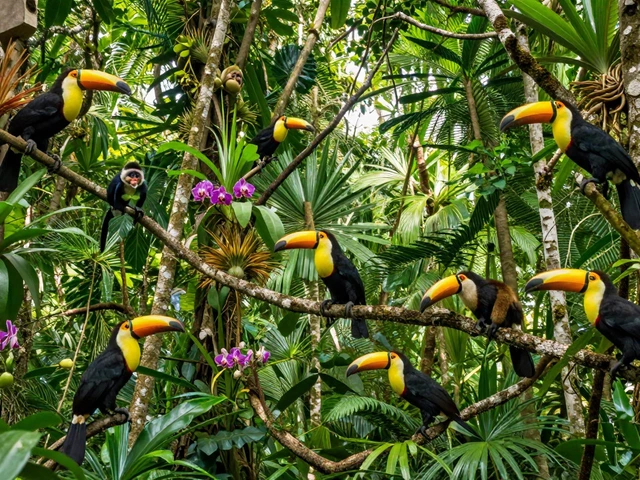
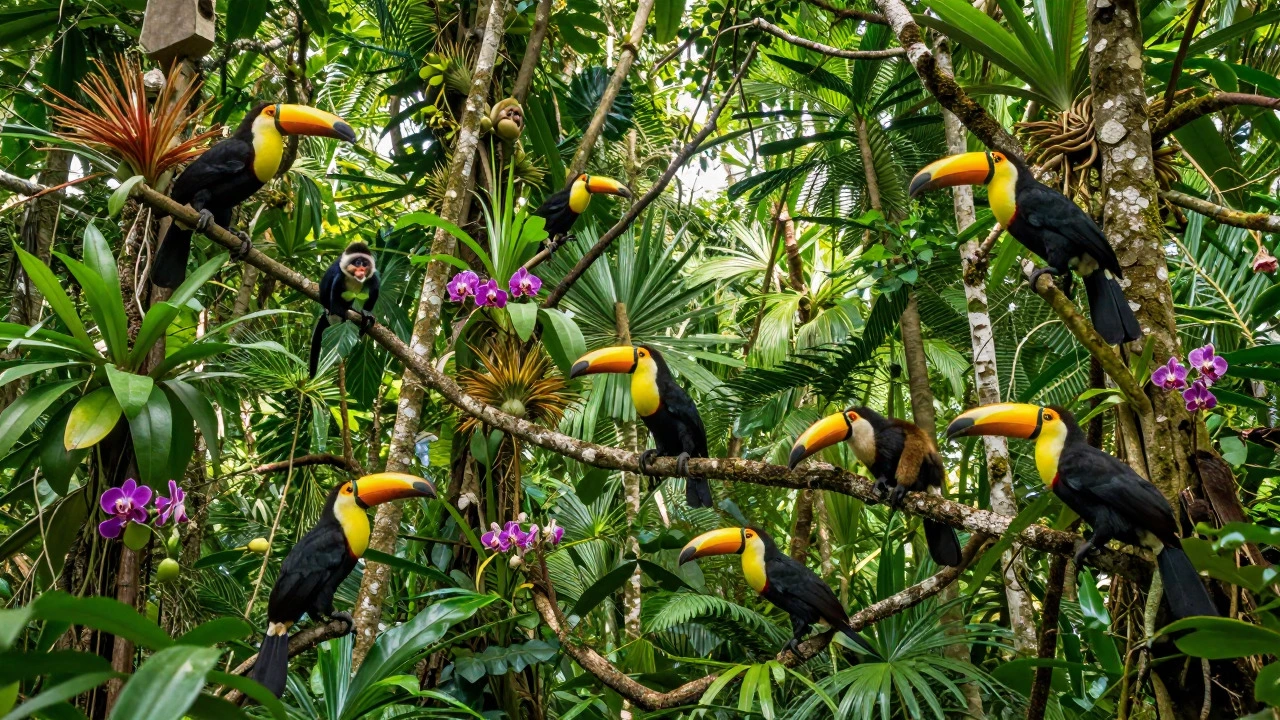
- Tropical Rainforest Canopy: Home to toucans, monkeys, epiphytic orchids, and countless insects. High biodiversity, intense competition for light, and complex symbiotic relationships. Deforestation here threatens global climate regulation.
- Arctic Tundra: Sparse vegetation including mosses, lichens, dwarf shrubs, and caribou. Low biodiversity, harsh conditions, and short growing seasons. Warming temperatures are melting permafrost, releasing methane and altering plant composition.
- Urban Park Ecosystem: Even cities host communities. Parks contain birds, squirrels, insects, trees, and microbes. While simplified compared to wild areas, they provide vital services like air filtration, recreation, and mental health benefits. Managing them requires balancing human use with ecological needs.
Each example shows that communities exist everywhere, from pristine wilderness to our backyards. Recognizing them helps us appreciate the hidden complexity in everyday environments.
Next Steps for Engaging with Local Communities
If you want to learn more about ecological communities near you, start by observing. Visit a local park, beach, or forest. Look for signs of interaction: who is eating whom? Where are the nests? What plants grow together? Join citizen science projects like iNaturalist, where you can upload photos of species and contribute to real research. Support local environmental groups working on habitat restoration or invasive species removal. Small actions add up when multiplied across thousands of engaged citizens.
Education is powerful. Schools and universities offer courses in ecology, but informal learning through documentaries, books, and guided tours works too. The more people understand how communities function, the better equipped they are to protect them.
What is the difference between a population and a community?
A population refers to a group of individuals of the same species living in a specific area. A community includes multiple populations of different species interacting within that same area. For example, all the robins in a park form a population; the robins, oak trees, squirrels, and earthworms together form a community.
Can a community exist without an ecosystem?
Technically, yes, but practically no. A community describes only the living components. However, those living components depend entirely on abiotic factors like water, sunlight, and nutrients. So while we can study communities in isolation theoretically, they always exist within an ecosystem context.
Why are keystone species important?
Keystone species maintain the structure and diversity of a community. Their removal causes disproportionate collapse or transformation of the ecosystem. Protecting them ensures the stability of many other species that rely on the conditions they help create.
How does human activity affect ecological communities?
Humans alter communities through habitat destruction, pollution, introduction of invasive species, and climate change. These changes reduce biodiversity, disrupt food webs, and simplify community structures, making them less resilient to further disturbances.
What is ecological succession?
Ecological succession is the gradual process by which ecosystems change and develop over time. Primary succession starts on barren land with no soil, while secondary succession occurs after a disturbance in an area with existing soil. Both lead toward a more stable, diverse community.
Are urban parks considered ecological communities?
Yes. Urban parks contain interacting species such as birds, insects, plants, and microorganisms. Though modified by humans, they still function as ecological communities providing services like pollination, waste decomposition, and habitat for wildlife.
How can I help protect local ecological communities?
You can participate in citizen science, volunteer with local conservation groups, reduce pesticide use, plant native species in your garden, and advocate for policies that protect natural habitats. Education and awareness are also key to fostering long-term stewardship.