Club Good Dynamics Simulator
Club Good
Excludable & Non-Rivalrous (initially)
Excludability
Can restrict access via fees or login.
Rivalry Status
Non-rivalrous: One user doesn't affect others.
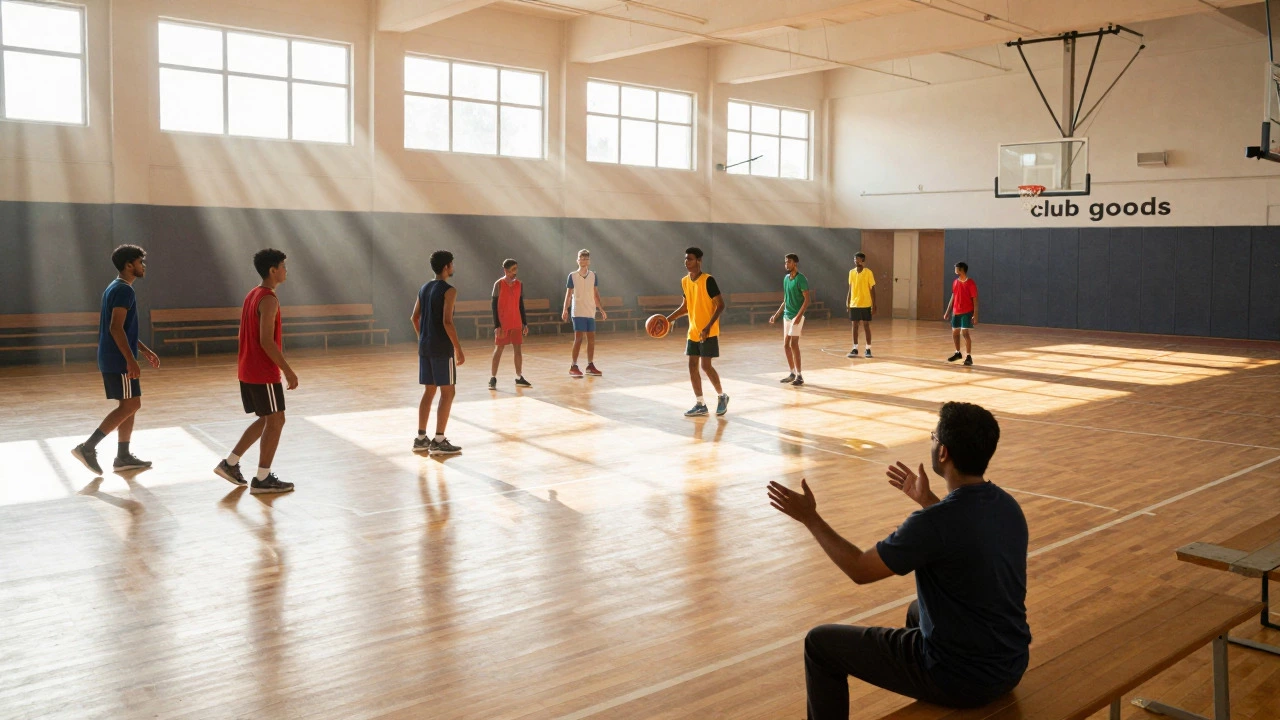
Imagine you walk into a high school gymnasium on a Tuesday afternoon. The basketball team is practicing. There are twenty players on the court, but the coach says there’s room for ten more. If another student joins, does it cost the school extra money to let them play? Not really. The hoop is already there. The floor is already painted. But if fifty people try to join at once, the game slows down. People get frustrated. That specific tension-where space exists until it doesn’t-is the heartbeat of what economists call a club good.
We hear about "public goods" like streetlights or national defense all the time. We know "private goods" like your iPhone or a sandwich from the cafeteria. But club goods sit in that weird middle ground. They are things you can exclude people from, but only up to a point where they start getting crowded. Understanding this concept helps explain why schools charge fees for certain activities, why streaming services limit devices, and how communities manage shared resources without chaos.
The Economics of Exclusion and Rivalry
To understand a club good, you have to look at two specific traits: excludability and rivalry. These aren't just academic buzzwords; they are the rules that dictate how we share stuff.
Excludability means you can stop someone from using something if they haven't paid or qualified. Think of a movie theater. If you don't buy a ticket, the usher stops you. You are excluded. A pure public good, like clean air, isn't excludable. You can't easily stop one person from breathing while letting another breathe.
Rivalry refers to whether one person's use reduces the amount available for others. If I eat an apple, you cannot eat that same apple. That is rivalrous. If I listen to a radio broadcast, it doesn't reduce the signal strength for my neighbor. That is non-rivalrous.
A club good is excludable but non-rivalrous (up to a point). This combination creates a unique dynamic. Because you can exclude people, you can charge a fee. Because it's not rivalrous (initially), adding one more user costs almost nothing. This makes club goods incredibly efficient for groups like schools, gyms, and online platforms.
| Good Type | Excludable? | Rivalrous? | Real-World Example |
|---|---|---|---|
| Private Good | Yes | Yes | A slice of pizza |
| Public Good | No | No | National defense |
| Club Good | Yes | No (until congested) | Cable TV subscription |
| Common Resource | No | Yes | Fish in the ocean |
After-School Clubs as Classic Club Goods
Let's bring this back to the school setting, since that is where many of us first encounter these structures. An after-school debate club is a textbook example of a club good. Here is why it fits the definition perfectly.
Exclusion is easy. The club has a roster. To join, you might need to pay a small membership fee, attend three meetings, or get a teacher's permission. If you aren't on the list, you don't get invited to the regional tournament. The barrier to entry is clear and enforceable.
Rivalry is low, initially. When Sarah practices her opening statement, it doesn't stop Mike from practicing his rebuttal. The knowledge shared in the meeting benefits everyone equally. One student learning a new argument doesn't "use up" that argument for the others. In fact, having more students often improves the quality of the debate through diverse perspectives. The marginal cost of adding one more student to the Zoom call or the classroom discussion is effectively zero.
However, the "club" aspect breaks down when congestion hits. Imagine the debate club wants to host a mock trial. There are only four roles: prosecutor, defense attorney, judge, and jury foreperson. If twenty students want those four roles simultaneously, the good becomes rivalrous. Only four can participate at once. The rest must wait. This transition from non-rivalrous to rivalrous is what economists call the "congestion point." Managing this point is the entire job of a club leader.
Digital Subscriptions and Online Communities
You don't need a physical building to have a club good. In fact, the digital world is built on them. Consider a streaming service like Netflix or Spotify. These are massive, global club goods.
Streaming Services are digital platforms that provide access to media content via subscription. They are strictly excludable. If you don't pay $15.49 a month, the screen stays black. Your password keeps strangers out. Yet, they are non-rivalrous. When you watch *Stranger Things*, it doesn't degrade the video quality for the millions of other people watching it at the same time. The server handles the load, but your consumption doesn't subtract from their experience.
This model works because the technology allows for near-infinite capacity before congestion sets in. Unlike the debate club with its limited speaking roles, a streaming service can scale to billions of users without the product becoming "crowded" in a meaningful way. This is why tech companies love the club good model: high fixed costs to build the platform, but near-zero variable costs per additional user.
Online forums and Discord servers operate similarly. You need an invite link (exclusion) to enter the community. Once inside, reading a post doesn't prevent anyone else from reading it (non-rivalry). But again, congestion can occur. If a chat channel moves too fast, new members can't keep up. The value of the interaction drops. Moderators step in to slow things down, effectively managing the club's capacity.

Physical Amenities: Gyms and Country Clubs
The term "club good" actually comes from the literal country clubs and health gyms of the mid-20th century. These remain some of the clearest examples because the physical limits are obvious.
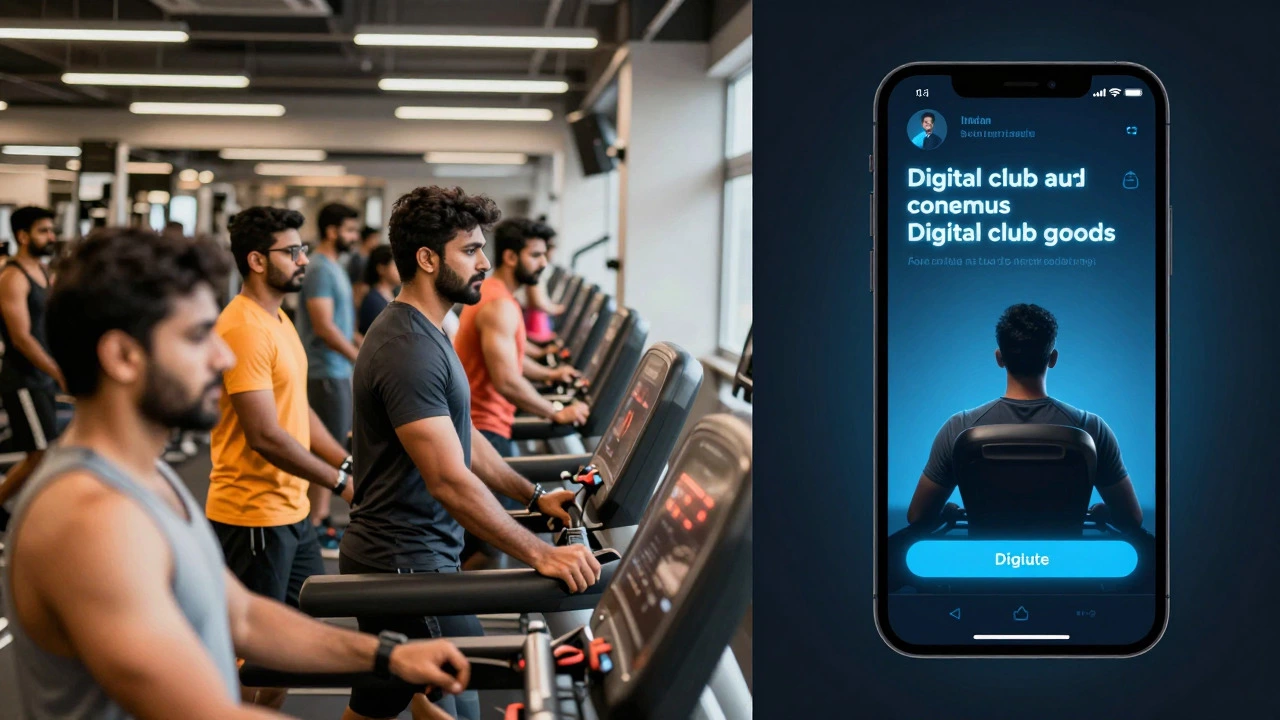
A local gym charges a monthly fee. This excludes non-members. Inside, there are twenty treadmills. If five people use them, no one cares. It's non-rivalrous. But if thirty people show up at 6 PM on a Monday, the treadmills become rivalrous. Someone has to wait. The value of the membership drops because of congestion.
This is why gyms cap memberships. They calculate their "carrying capacity." If they sell too many memberships, the facility becomes overcrowded, equipment breaks faster, and members leave. They are balancing the revenue from exclusion against the degradation of the experience due to rivalry. This delicate balance is the defining challenge of any club good provider.
The Tragedy of the Commons vs. The Success of Clubs
Economists often contrast club goods with "common resources," like a public park or a fishery. Common resources are non-excludable (anyone can enter the park) but rivalrous (if too many people picnic, the grass dies). This leads to the "Tragedy of the Commons," where overuse destroys the resource.
Club goods solve this problem by introducing exclusion. By charging a fee or requiring membership, the group controls who enters. This prevents overuse. For example, a private hiking trail association might limit permits to protect the ecosystem. Because they can say "no" to hikers, they preserve the trail for those who do go. The exclusion mechanism acts as a conservation tool.
In schools, this looks like limiting the size of a robotics team to ensure every member gets hands-on time with the expensive robots. Without that limit (exclusion), the robots would break, and no one would learn anything (rivalry/congestion). The club structure protects the educational value.
How to Manage a Club Good Effectively
If you are running an after-school club, a co-op, or a community group, understanding these dynamics helps you make better decisions. Here are practical steps to keep your "club" functioning well.
- Define Clear Entry Rules. Make sure everyone knows how to join. Whether it's a fee, an application, or a skill test, the criteria for exclusion must be transparent. Ambiguity leads to conflict.
- Identify Your Congestion Point. Ask yourself: "At what number does the experience get worse for everyone?" For a book club, it might be twelve people. For a coding workshop, it might be twenty. Know this number.
- Rotate Access if Necessary. If demand exceeds your congestion point, don't just turn people away permanently. Create waiting lists or rotate roles. In the debate club, alternate who speaks in practice sessions. This maintains fairness and keeps the good non-rivalrous in spirit.
- Invest in Capacity. If your club is consistently hitting its congestion point, consider expanding. Buy more equipment, hire another advisor, or split into two groups. Growth should happen before the quality drops.
- Monitor Member Satisfaction. Regularly ask members if they feel crowded or excluded unfairly. Feedback loops help you adjust the balance between openness and exclusivity.
Why This Matters for Students and Educators
Understanding club goods isn't just about passing an economics test. It teaches valuable lessons in resource management, fairness, and community building. For students, it explains why some opportunities are competitive and why rules exist. It demystifies the logic behind membership fees and capacity limits.
For educators and administrators, it provides a framework for designing programs that are sustainable. Instead of viewing exclusion as unfair, they can see it as a necessary tool to preserve quality. By recognizing the difference between a public good (open to all, potentially degraded) and a club good (managed access, preserved quality), schools can create environments where students thrive without burning out the resources.
The next time you sign up for a school club, a gym membership, or a streaming service, remember: you aren't just buying access. You're joining a carefully balanced system designed to maximize value while minimizing crowding. That balance is what makes the club work.
Is a public park a club good?
Generally, no. A standard public park is considered a common resource or a public good depending on the context. It is usually non-excludable (anyone can enter) but can become rivalrous if it gets too crowded. However, if a park requires a ticket or membership to enter, it transforms into a club good because it becomes excludable.
What is the main difference between a club good and a private good?
The key difference is rivalry. Private goods are rivalrous, meaning one person's use prevents another's (like eating a sandwich). Club goods are non-rivalrous up to a point, meaning one person's use doesn't significantly impact another's (like watching a movie on cable), until congestion occurs.
Can a club good become a public good?
Not typically, because the core feature of a club good is excludability. If you remove the ability to exclude people (like removing the gate from a country club), it may become a common resource or public good, but it risks overuse and degradation unless managed by other means.
Why are after-school clubs considered club goods?
After-school clubs are excludable because they require membership, fees, or approval to join. They are non-rivalrous because one student participating doesn't necessarily reduce the benefit for others, until the group size exceeds the capacity of the activity or space.
What happens when a club good reaches its congestion point?
When a club good reaches its congestion point, it becomes rivalrous. The value of the good decreases for all users because of overcrowding. To fix this, the club must either increase capacity (add more resources) or restrict access further (exclude more people).