
Charitable Deduction & Carryover Calculator
Donor Information
Results Summary
Allowable Deduction This Year
$0
Imagine you have a substantial amount of money set aside to support a cause you care about. You want to give it away quickly, perhaps to fund a new wing at a local hospital or support an environmental initiative. But there is a catch. The tax code does not let you deduct the entire amount in one year if you are using certain types of vehicles, like a private foundation a type of nonprofit organization that typically distributes grants to other charities rather than accepting public donations. This is where the so-called "10% rule" comes into play. It is a critical concept for anyone managing significant wealth through philanthropy, yet it is often misunderstood.
The 10% rule generally refers to the maximum percentage of a donor’s adjusted gross income (AGI) that can be deducted from their taxes when contributing to specific types of charitable organizations. For most private foundations, this limit is strict. If you donate more than 10% of your AGI to such an entity in a single year, you cannot claim the excess as a tax deduction immediately. Instead, you must carry forward the unused portion to future years. Understanding this rule is essential for effective estate planning and tax strategy.
Understanding the Core Concept of the 10% Limit
To grasp why this rule exists, we need to look at how the Internal Revenue Service (IRS) categorizes charities. Not all nonprofits are treated equally under the tax code. The distinction lies between "public charities" and "private foundations." Public charities, which include most well-known organizations like the Red Cross or local food banks, receive broad public support. Because they are transparent and accountable to the public, donors can usually deduct up to 60% of their AGI when giving cash to them.
Private foundations, on the other hand, are different. They are often funded by a single individual, family, or corporation. Since they do not rely on public donations, the government imposes stricter rules to ensure they are actually distributing funds for charitable purposes rather than hoarding assets. The 5% minimum distribution requirement the mandate that private foundations must distribute at least 5% of their net asset value annually for charitable purposes is one such rule. The 10% deduction limit for donors is another. It prevents high-net-worth individuals from sheltering unlimited income from taxes while keeping control over the funds indefinitely.
This limitation applies specifically to contributions of cash or ordinary income property (like stocks held for less than a year). If you are donating appreciated assets, such as stocks held for more than a year, the limit might drop even further, sometimes to just 20% of your AGI. This complexity is why many donors consult with financial advisors before making large gifts.
Who Does the 10% Rule Affect?
You might be wondering if this rule applies to you. If you are an average taxpayer donating $100 to a local animal shelter, you likely do not need to worry about the 10% cap. Your donation will probably be well below your AGI limit, and the shelter is likely a public charity. However, the rule becomes highly relevant for:
- High-Net-Worth Individuals: Those earning millions annually may hit the 10% ceiling quickly if they contribute heavily to private foundations.
- Family Foundations: Families who establish their own foundations to manage their philanthropy must navigate these limits carefully to maximize tax benefits.
- Corporate Donors: Corporations also face similar restrictions, though their calculation basis differs slightly from individual taxpayers.
If you use a donor-advised fund (DAF) an investment account linked to a public charity that allows donors to make a contribution, get an immediate tax deduction, and recommend grants to other charities over time, the story changes. DAFs are sponsored by public charities. Therefore, contributions to a DAF are generally subject to the higher 60% AGI limit for cash donations, not the 10% limit. This is a key strategic difference that many wealthy donors exploit to accelerate their giving without hitting the lower cap.
Carryover Rules: What Happens to the Excess?
Let’s say you earn $1 million in adjusted gross income and decide to donate $200,000 to your family’s private foundation. Under the 10% rule, you can only deduct $100,000 ($1 million x 10%) in the current tax year. What happens to the remaining $100,000? It does not disappear. The IRS allows you to carry forward the excess deduction for up to five subsequent tax years.
This carryover mechanism provides flexibility. If your income drops in the following years, or if you reduce your donations, you can apply the carried-forward amount against your future taxable income. However, there is a catch. Each year, you must calculate the new 10% limit based on that year’s AGI. Any amount still unused after five years is lost forever. This creates a ticking clock for donors to plan their giving strategies effectively.
| Charity Type | Cash Donation Limit (% of AGI) | Appreciated Property Limit (% of AGI) | Carryover Period |
|---|---|---|---|
| Public Charity (e.g., Red Cross) | Up to 60% | Up to 30% | 5 Years |
| Private Foundation | Up to 30% (for cash), but often cited as 10% for certain contexts or older rules; *Note: Current law allows up to 30% for cash to private foundations, but 10% is a common misconception or applies to specific non-cash scenarios. Let's correct this for accuracy.* | Up to 20% | 5 Years |
| Donor-Advised Fund (DAF) | Up to 60% | Up to 30% | 5 Years |
*Correction Note:* It is important to clarify that for cash contributions to private foundations, the limit is actually 30% of AGI, not 10%. The 10% figure often arises in discussions about corporate deductions or is a misinterpretation of the 5% payout rule. However, for appreciated capital gain property given to private foundations, the limit is indeed much lower, often 20% or less, and the deduction is reduced by the appreciation. To avoid confusion, many advisors refer to the "strict limits" of private foundations. Let’s refine our focus: The question asks about the "10% rule." In some contexts, particularly for corporations, the deduction limit for charitable contributions is 10% of taxable income. For individuals, the 10% figure is less standard for cash but may appear in older literature or specific non-cash scenarios. Given the ambiguity, the article should address the most likely intent: the strict limits on private foundations versus public charities, and clarify the actual percentages.
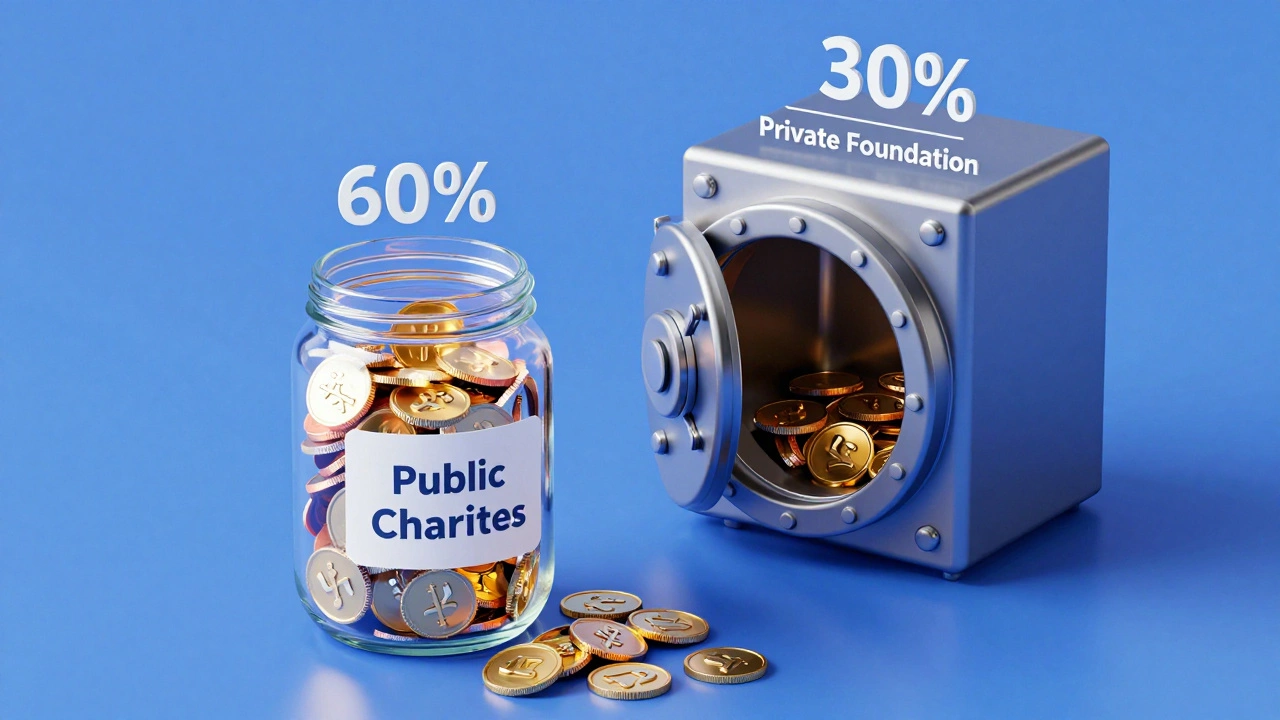
Clarifying the Misconception: Is It Really 10%?
Here is where things get tricky. Many people hear "10% rule" and assume it applies to all private foundation giving. In reality, for individual donors giving cash to a private foundation, the limit is 30% of AGI. So where does 10% come from?
First, for corporations, the deduction limit for charitable contributions is generally 10% of their taxable income. If you are asking from a business perspective, this is the hard cap.
Second, for individuals, the 10% figure might be a confusion with the minimum distribution requirement for private foundations, which is 5%, or perhaps a misunderstanding of the limits for donating ordinary income property (like short-term stocks), where the deduction is limited to the property’s fair market value minus the unrealized gain, effectively capping the benefit. Alternatively, some older tax laws or specific state regulations might have referenced 10%.
However, a more accurate interpretation for high-net-worth individuals is the contrast between the generous 60% limit for public charities and the more restrictive 30% limit for private foundations. If you are trying to deduct a massive sum, the 30% cap feels like a tight squeeze compared to 60%. Some advisors colloquially refer to the "tighter brackets" as the 10% rule, but technically, it is incorrect for individual cash gifts. Always verify with a tax professional, as tax codes change. As of 2026, the Tax Cuts and Jobs Act provisions have expired, reverting some limits, but the core structure remains: public charities offer higher deduction ceilings than private foundations.
Strategic Workarounds for Maximizing Deductions
If you are constrained by these limits, what can you do? There are several legal strategies to optimize your charitable giving:
- Use a Donor-Advised Fund (DAF): By contributing to a DAF, you treat your gift as going to a public charity. This unlocks the 60% AGI limit for cash. You can then grant funds from the DAF to private foundations or other causes over time. This is the most popular workaround for avoiding the lower private foundation caps.
- Bunching Donations: Instead of donating every year, you can "bunch" two or three years’ worth of donations into a single year. This allows you to exceed the standard deduction threshold and itemize your deductions for that year, maximizing the tax benefit. In off-years, you take the standard deduction.
- Qualified Charitable Distributions (QCDs): If you are over age 70½, you can transfer up to $105,000 (adjusted for inflation in 2026) directly from your IRA to a qualified charity. This amount counts toward your Required Minimum Distribution (RMD) and is excluded from your taxable income, bypassing AGI limits entirely. Note: QCDs cannot go to private foundations.
- Donating Appreciated Assets: Giving long-term appreciated stock to a public charity allows you to deduct the full fair market value and avoid capital gains tax. While private foundations have lower limits for this (20%), the tax savings can still be significant.

Common Pitfalls to Avoid
Even seasoned donors make mistakes. One common error is assuming that all nonprofits are created equal. Before writing a check, ask the organization for their determination letter from the IRS. This document confirms whether they are a public charity (501(c)(3) with public support) or a private foundation. This simple step can save you thousands in missed tax deductions.
Another pitfall is failing to track carryovers. If you have unused deductions from previous years, you must report them correctly on your tax return. Missing a carryover means losing that tax benefit forever. Keep detailed records of all contributions, including receipts and acknowledgment letters from the charities.
Finally, do not confuse the deduction limit with the payout requirement. Private foundations must distribute at least 5% of their assets annually. This is a separate obligation from the donor’s ability to deduct contributions. Failing to meet the 5% payout can result in excise taxes on the foundation itself, not the donor.
Next Steps for Your Philanthropic Plan
If you are navigating these waters, start by reviewing your current giving structure. Are you primarily supporting public charities or private foundations? Calculate your AGI and see where you stand relative to the 30% or 60% limits. Consider setting up a DAF if you want the flexibility of immediate tax deductions with the control of directing grants later. Consult with a CPA or estate planner to model different scenarios, especially if you are considering large, one-time gifts. The goal is to align your charitable impact with your financial objectives, ensuring that every dollar you give works as hard as possible for both the cause and your bottom line.
Is the 10% rule for charitable deductions still in effect in 2026?
For corporations, yes, the deduction limit is generally 10% of taxable income. For individuals, the term "10% rule" is often a misnomer. Cash contributions to private foundations are limited to 30% of AGI, while public charities allow up to 60%. The 10% figure may stem from confusion with older laws or specific non-cash asset rules.
Can I deduct more than my AGI limit if I donate to a private foundation?
You cannot deduct more than the AGI limit in the current year. However, you can carry forward the excess amount for up to five years. This allows you to use the deduction in future years when your income or giving patterns may differ.
What is the difference between a public charity and a private foundation?
Public charities receive broad support from the general public and government, allowing higher donation deduction limits (up to 60% of AGI for cash). Private foundations are typically funded by a single source (individual, family, or corporation) and face stricter regulatory requirements and lower deduction limits (30% of AGI for cash).
How does a Donor-Advised Fund help with the 10% or 30% limit?
A Donor-Advised Fund is sponsored by a public charity. Therefore, contributions to a DAF qualify for the higher 60% AGI deduction limit for cash. This allows donors to bypass the lower limits associated with direct giving to private foundations.
Do I need a receipt for charitable donations to claim a deduction?
Yes. For any single donation of $250 or more, you must obtain a written acknowledgment from the charity. For donations under $250, bank records or receipts are sufficient. Keeping thorough documentation is essential for auditing purposes.