Flirt in Club: What It Really Means and How It Connects to Community and Charity
When people say "flirt in club," they often think of playful glances, cheap pick-up lines, or dancing too close. But what if "flirting" isn’t about romance at all? What if it’s just another word for human connection, the natural, unscripted way people build trust and rapport in social spaces. Also known as social engagement, it’s the quiet art of making someone feel seen—without saying a word. That’s exactly what outreach workers, volunteers, and community organizers do every day—except they’re not in clubs. They’re in shelters, food lines, and parks, doing the same thing: reading body language, matching energy, and creating safety so someone will open up.
Real connection doesn’t need a beat or a cocktail. It needs presence. The person who hands a warm meal to someone sleeping on the sidewalk isn’t doing charity because they feel guilty. They’re doing it because they made eye contact, nodded, and waited. That’s flirting—in the purest sense. It’s the willingness to be vulnerable enough to ask, "Are you okay?" and actually listen to the answer. And that’s the same skill that turns a one-time volunteer into a lifelong advocate. Community engagement, the ongoing effort to build trust and participation within a local group. Also known as local outreach, it’s not about events or flyers. It’s about showing up, consistently, even when no one’s watching. The same person who learns to read a room in a club learns to read a crowd at a food drive. The same intuition that tells you someone isn’t into dancing tells you someone isn’t ready to accept help. Both require patience. Both require humility.
And here’s the truth most people miss: the most effective charities don’t run campaigns. They run relationships. They don’t ask for donations—they ask for conversations. The volunteers who stay the longest aren’t the ones with the biggest resumes. They’re the ones who remembered someone’s name, asked about their dog, and came back next week to check in. That’s not fundraising. That’s flirting—with purpose.
You’ll find stories here about outreach workers who spend years earning trust before offering a single resource. About people who turned empty lots into community gardens by starting with small talk. About how a simple "How was your day?" can be more powerful than a thousand flyers. These aren’t feel-good tales. They’re proof that the same social skills people use to flirt in a club are the exact tools that rebuild broken neighborhoods.
Below, you’ll find real examples of how connection drives change—not just in clubs, but in kitchens, alleys, and waiting rooms. You’ll learn how to spot the difference between performative charity and real care. And you’ll see why the best nonprofits aren’t the loudest. They’re the ones who learned how to listen first.
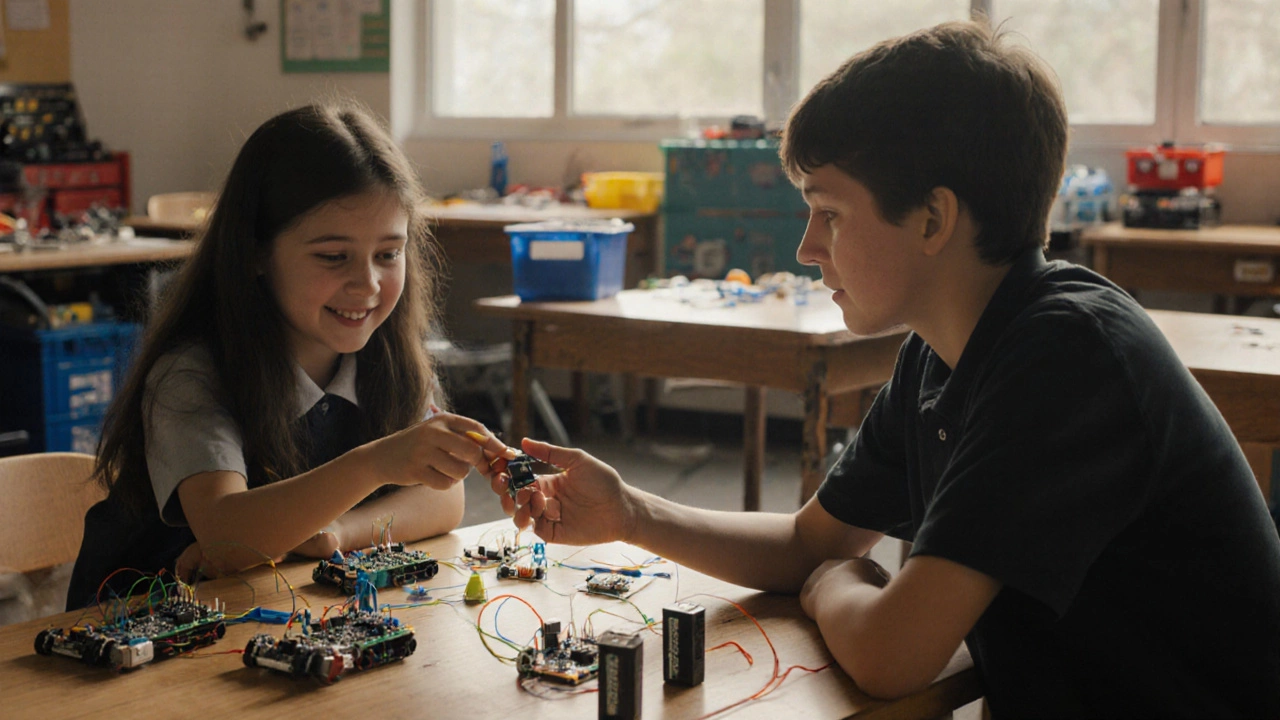
How to Flirt in a Club: Real Tips for After-School Settings
Learn how to connect with others in after-school clubs through quiet, genuine actions-not forced flirting. Real tips for teens on building trust, reading cues, and staying respectful.
Read More