Volunteer Proof Strength Calculator
Check the elements present in your current documentation.
Verification Score
Select options above to see your result.
You spent six months helping at the local food bank or mentoring students after school. Now you need to prove it for a university application, a job interview, or a scholarship form. The organization says they can provide a "reference," but what does that actually look like? And what if your supervisor is too busy to write anything?
Proving your volunteer work isn't just about showing you showed up. It’s about creating a paper trail that validates your time, skills, and impact. Without the right documentation, your efforts might look like a gap in your resume rather than valuable experience. Here is exactly how to secure that proof before you need it.
The Gold Standard: A Formal Reference Letter
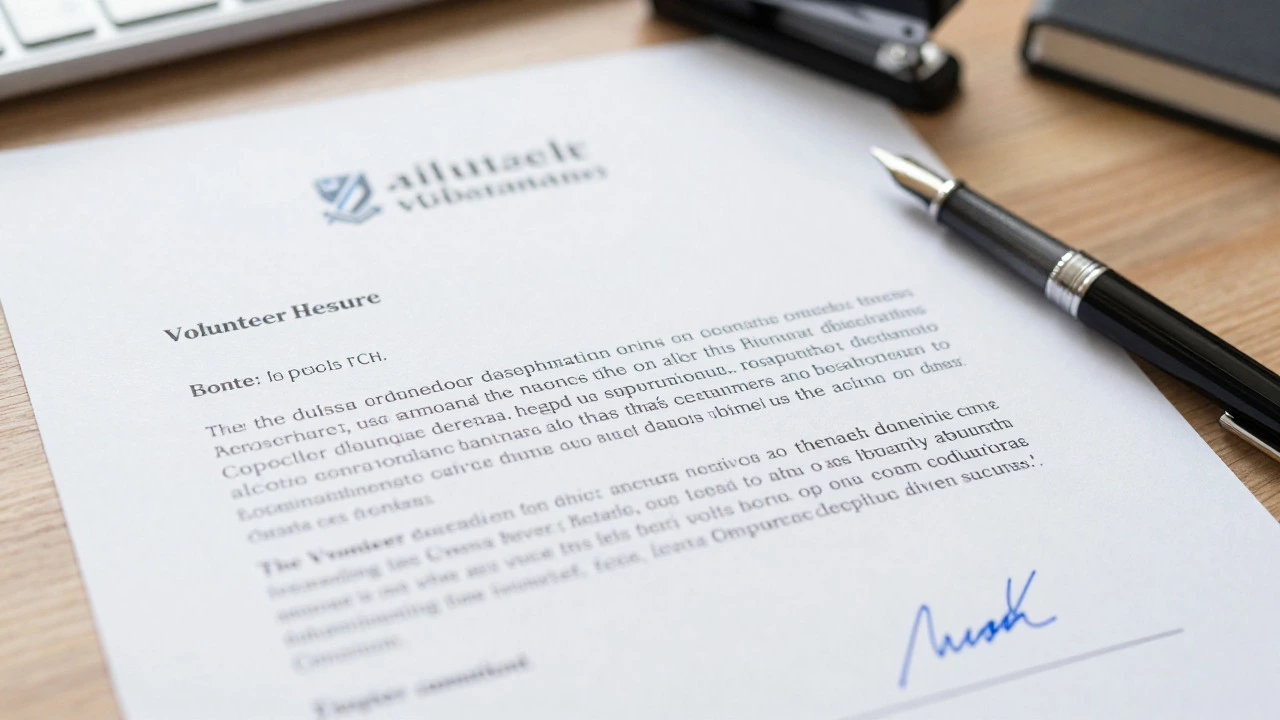
The most universally accepted form of proof is a formal reference letter. This isn't a casual email saying "Leland was great." It needs to be structured, specific, and official.
A strong reference letter should include:
- Official Letterhead: Printed on paper or digitally formatted with the organization's logo, address, and contact details. This immediately adds credibility.
- Dates of Service: Clear start and end dates. If you volunteered intermittently, list the total number of weeks or months.
- Total Hours: A specific count of hours worked. "Approximately 100 hours" is okay, but "104 hours between January and June" is better.
- Role Description: What did you actually do? Did you serve meals, tutor math, or organize inventory? Specificity helps employers or admissions officers understand your skill set.
- Contact Information: The direct phone number and email of the supervisor who signed it. Verifiers will call this person.
If you are asking for this letter, make it easy for your supervisor. Don’t just say, "Can you write me a reference?" Instead, send them a draft or a bulleted list of your achievements. Say, "I handled the weekly donor calls and increased our database by 15%. Could you mention that in the letter?" This reduces their workload and ensures the letter highlights your best work.
Certificates of Appreciation and Completion
Some organizations issue certificates of appreciation or completion certificates. While these look nice on a wall, they are often weaker forms of proof than a reference letter unless they contain specific data.
To make a certificate useful for verification, ensure it includes:
- Your full legal name.
- The exact title of your role (e.g., "Junior Mentor" not just "Volunteer").
- The date of issuance.
- A signature from an authorized representative.
If your organization only offers a generic "Thank You" card, ask if they can supplement it with a one-page summary of your duties. A certificate without context tells a reader you were there; a summary tells them what you accomplished.
Tracking Your Hours: Digital vs. Paper Logs
Many charities use digital platforms to manage volunteers. In New Zealand and many other countries, systems like Volunteering NZ or global platforms like Idealist or AllforGood may track your participation. If your organization uses internal software like VolunteerHub, BetterImpact, or even simple Google Forms, your login history can serve as secondary proof.
However, digital logs can sometimes be glitchy or deleted when staff leave. Always keep a personal backup. Create a simple spreadsheet where you log:
- Date of service
- Start and end times
- Activity performed
- Name of the supervisor present
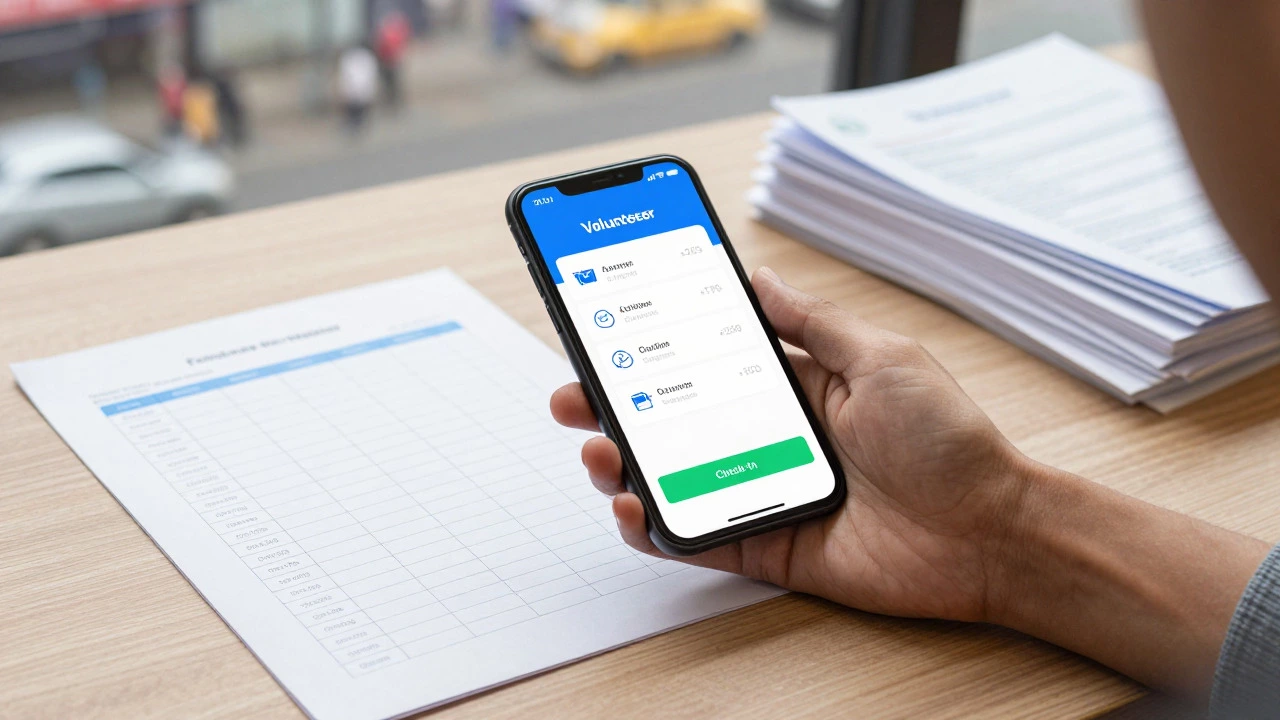
Take screenshots of your digital clock-in/out records once a month. Save these PDFs in a dedicated folder on your computer. If the organization’s server crashes or your account gets locked, you still have your own record.

What If There Is No Official Documentation?
Sometimes you volunteer with small, informal groups-a neighborhood clean-up crew, a church group, or a family friend’s startup. They might not have letterheads or HR departments. Does that mean your effort counts for nothing? Not necessarily, but you have to get creative.
In these cases, a signed affidavit or a detailed email chain can work. Ask your coordinator to send an email confirming your role and hours. Reply to that email with a summary of your tasks and ask them to reply "Confirmed." Print this thread. It serves as a contemporaneous record.
You can also gather collateral evidence. Did you take photos of yourself working (with permission)? Do you have receipts for supplies you bought? Keep these. When applying for jobs, you can explain: "While this was an informal arrangement, here is the email confirmation from the project lead and examples of the work I delivered."
Verification for Background Checks and Vetting
If you are volunteering in sensitive areas like healthcare, education, or with vulnerable populations, you likely underwent a background check. In New Zealand, this might involve a Vulnerable Persons Check or police clearance. These documents prove you were cleared to volunteer, but they don't prove you *did* volunteer.
Keep copies of your clearance certificates. Some employers view having a current, valid background check as a plus because it shows you are vetted and ready to start quickly. However, remember that a background check expires. If you are proving volunteer work from three years ago, the old check is less relevant than the reference letter from that time period.
| Document Type | Best For | Reliability | Difficulty to Obtain |
|---|---|---|---|
| Reference Letter | Jobs, University, Scholarships | High | Medium (requires supervisor effort) |
| Certificate of Completion | Resume filler, LinkedIn | Medium | Low (often automatic) |
| Email Confirmation | Informal roles, short-term projects | Medium-Low | Low |
| Personal Log + Screenshots | Backup, self-tracking | Low (without corroboration) | Low (self-managed) |
Tips for Requesting Proof Gracefully
Asking for proof can feel awkward. You don't want to seem ungrateful or bureaucratic. Frame your request around your future goals. Say something like: "I’m applying for a program that requires verified community service hours. Would you be able to provide a brief letter confirming my tenure and role? I’ve attached a draft to make it easier for you."
Timing matters. Ask for the letter at least two weeks before your deadline. Supervisors are busy. If you wait until the night before, you risk getting a rushed, vague note-or none at all.
If your main supervisor leaves the organization, find out who their replacement is immediately. Introduce yourself, remind them of your past contributions, and update your contact file. Continuity of communication ensures you can get proof even after personnel changes.
Common Pitfalls to Avoid
Don't assume verbal confirmation is enough. "Sure, Leland helped us out" sounds good in conversation but means little on paper. Get it in writing.
Avoid exaggerating your role. If you were a general helper, don't claim you were a team leader. Verifiers often call supervisors to ask specific questions. If your story doesn't match theirs, you lose credibility. Honesty builds trust; inflation breaks it.
Finally, don't forget to thank your supervisor. Send a handwritten note or a sincere email after they provide your reference. This keeps the relationship warm for future requests. You never know when you'll need another reference in six months.
How far back can volunteer references go?
Most employers and universities accept volunteer references from the last 3 to 5 years. Older references may be viewed as less relevant unless the role directly relates to your current career path. If your volunteer work is older, try to pair it with more recent activities or highlight transferable skills.
Can I use a LinkedIn recommendation as proof of volunteering?
A LinkedIn recommendation supports your resume but is rarely sufficient as standalone proof for formal applications like scholarships or government grants. It lacks official letterhead and verifiable contact details. Use it as supplementary evidence alongside a formal letter or certificate.
What if my volunteer organization closes down?
If an organization closes, try to contact former directors or board members personally. They can still sign a letter on personal letterhead or via email. Include any archived emails, photos, or press releases that mention your involvement to corroborate your claim.
Do unpaid internships count as volunteering?
Yes, unpaid internships are a form of volunteering if no wage was exchanged. Treat them the same way: get a reference letter detailing your tasks, hours, and learning outcomes. Clarify in your application that it was an unpaid role to avoid confusion.
Is a screenshot of a volunteer app enough proof?
Screenshots can serve as secondary evidence, especially if the primary verifier is unavailable. However, they are easily faked, so some institutions may doubt them. Combine screenshots with an email from a supervisor or a signed log sheet for stronger validation.