
Volunteer Readiness Score Calculator
Your Volunteer Profile
Calculating...
Please answer all questions.
Answer the questions to see your volunteer readiness score.
Picture this: You sign up to help at a local food bank. You’re excited, ready to make a difference. But on your first day, you show up late, don’t know where the boxes are, and leave early because no one told you what time to stop. The coordinator is frustrated. The other volunteers are confused. And you? You feel like a burden.
This isn’t just bad luck-it’s a breakdown in the core principles that keep non-profit work running smoothly. In the world of volunteering, there is an unwritten rulebook. Experienced coordinators often refer to it as the "4 C’s." It’s not a strict academic theory found in textbooks, but rather a practical framework used by organizations from Wellington community centers to global NGOs to ensure that volunteer efforts are effective, sustainable, and respectful for everyone involved.
If you want to be more than just a body filling a seat, understanding these four pillars-Commitment, Communication, Competence, and Care-is essential. They transform a casual helper into a reliable partner in mission-driven work.
1. Commitment: Showing Up Consistently
Let’s start with the most obvious one. Commitment isn’t just about saying "yes" when asked if you want to volunteer. It’s about honoring that yes. In the non-profit sector, resources are tight. Staff members plan schedules around volunteer availability. If you say you’ll be there every Tuesday from 9 AM to 12 PM, that promise carries weight.
Think of it like a part-time job, but with higher stakes for reliability. If an employee calls in sick without notice, it might cost money. If a volunteer disappears without warning, it can disrupt critical services. Imagine a shelter that prepared hot meals based on your promised shift, only to have you no-show. That food goes to waste, and hungry people go without. That’s the real-world impact of broken commitment.
What good commitment looks like:
- Consistency: Arriving on time, every time, for your scheduled shifts.
- Duration: Staying for the full agreed-upon period unless an emergency arises.
- Follow-through: Completing tasks you said you would do, even if they aren’t glamorous.
If life gets busy-and it will-the key is to give advance notice. A text message two days before saying, "I can’t make it this week," allows the coordinator to find coverage. Ghosting is never an option. True commitment means recognizing that your role is part of a larger machine, and your gear needs to turn predictably.
2. Communication: The Bridge Between Intent and Action
You can be the most committed person in the room, but if you don’t communicate, you’re still creating friction. Communication in volunteering goes both ways: upward to supervisors and laterally to fellow volunteers.
New volunteers often fall into the trap of assuming things. You see a stack of papers and assume you should file them. You see a door propped open and assume you should close it. While initiative is good, acting without asking can lead to mistakes. In sensitive environments, like elderly care or youth programs, miscommunication can compromise safety or privacy.
Effective communication strategies include:
- Asking questions: Never guess. If you’re unsure how to handle a situation, ask the coordinator or a senior volunteer.
- Active listening: Pay attention during training sessions. Don’t zone out while someone explains safety protocols.
- Feedback loops: Share your thoughts. If a process seems inefficient, suggest improvements respectfully.
- Transparency: If you’re struggling with a task, say so immediately. Hiding confusion until the end of the shift helps no one.
Good communication also means reading the room. If a staff member looks overwhelmed, offer specific help instead of general assistance. Instead of saying, "Can I help?" try, "I see those boxes need sorting; can I take those off your plate?" Specificity reduces cognitive load for busy coordinators.
3. Competence: Doing the Job Right
There’s a common misconception that volunteering requires no skills. This couldn’t be further from the truth. Competence refers to having the necessary knowledge, skills, and attitude to perform your role effectively. Whether you’re serving food, tutoring students, or planting trees, doing it poorly can cause harm.
Consider a volunteer at an animal shelter. If they don’t understand how to safely hold a leash, they could injure themselves, the animal, or another visitor. Or think about a volunteer helping with data entry for a charity. If they input incorrect donation records, the organization’s financial reporting becomes flawed, potentially affecting grant applications.
Building competence involves:
- Training participation: Attend all mandatory orientations. These sessions cover legal liabilities, safety procedures, and organizational values.
- Skill development: If you’re volunteering in education, brush up on teaching methods. If you’re in environmental advocacy, learn about local ecosystems.
- Adherence to guidelines: Follow established protocols. Even if you have a better idea, stick to the tested method until you’ve earned the trust to innovate.
- Continuous learning: Stay updated on changes in policies or procedures.
Organizations invest time in training volunteers because competence protects everyone. It ensures that the service provided meets professional standards, even if the labor is unpaid. When you demonstrate competence, you gain autonomy. Coordinators start trusting you with more responsibility because they know you won’t cut corners.

4. Care: The Heart of Service
The final C is the hardest to measure but the most important. Care is about empathy, respect, and genuine concern for the people and causes you serve. It’s the difference between going through the motions and making a meaningful connection.
In homelessness support, for example, care means treating individuals with dignity, not pity. It means listening to their stories without judgment and respecting their boundaries. In environmental groups, care translates to stewardship-protecting nature not just for today, but for future generations.
Practicing care includes:
- Empathy: Putting yourself in others’ shoes. Understand why a client might be angry or withdrawn.
- Respect: Honoring confidentiality, cultural differences, and personal space.
- Patience: Recognizing that change takes time. Progress in social work is rarely linear.
- Integrity: Aligning your actions with the organization’s mission. Don’t volunteer for resume padding alone; volunteer because you believe in the cause.
Care also extends to your fellow volunteers. Be supportive. Celebrate small wins. Acknowledge that everyone has different motivations and capacities. A culture of care creates a positive environment where people want to stay and contribute long-term.
| C-Principle | Key Focus | Common Pitfall | Best Practice |
|---|---|---|---|
| Commitment | Reliability & Consistency | No-shows or last-minute cancellations | Honor schedules; give advance notice if unavailable |
| Communication | Clarity & Feedback | Assuming tasks without asking | Ask questions; listen actively; provide updates |
| Competence | Skill & Safety | Ignoring training protocols | Complete all training; adhere to guidelines |
| Care | Empathy & Respect | Treating beneficiaries as projects, not people | Show genuine interest; maintain confidentiality |
Why the 4 C's Matter for Organizations
From the perspective of a non-profit leader, the 4 C’s are risk management tools. High turnover among volunteers is expensive. Recruiting, screening, and training new volunteers drains limited resources. When volunteers embody these four principles, organizations can focus on their mission rather than managing chaos.
For instance, a volunteer who demonstrates competence reduces liability risks. One who shows commitment stabilizes operational planning. Those who practice communication prevent misunderstandings that could damage reputation. And those who exhibit care build trust within the community, which is vital for fundraising and public support.
In New Zealand, where community-led initiatives play a significant role in social welfare, these principles are especially relevant. Local trusts and charities rely heavily on volunteer power. When volunteers uphold the 4 C’s, they strengthen the entire ecosystem of giving and receiving.
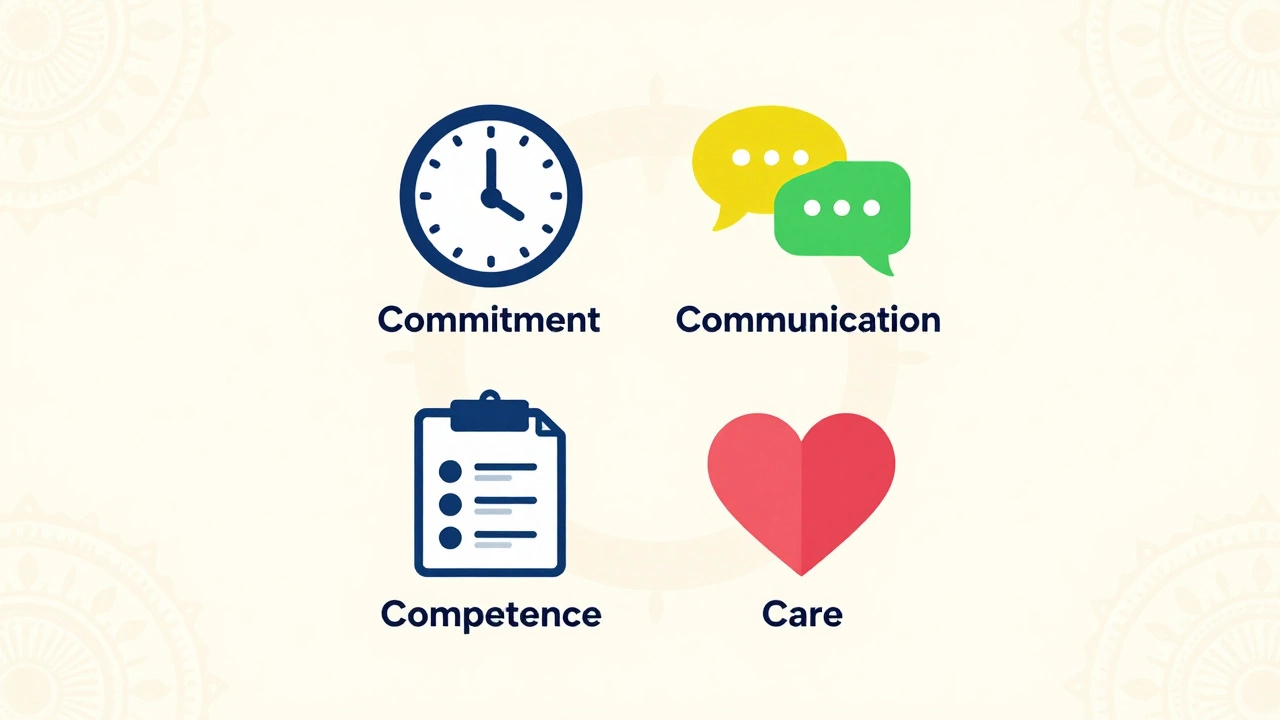
Applying the 4 C's in Different Contexts
The beauty of the 4 C’s framework is its adaptability. Let’s look at how they apply across different types of volunteer opportunities.
In Education: A tutor committing to weekly sessions (Commitment) must clearly explain concepts (Communication), master the subject matter (Competence), and encourage students patiently (Care).
In Environmental Advocacy: A park cleaner showing up regularly (Commitment) reports hazardous waste properly (Communication), knows safe handling procedures for chemicals (Competence), and respects wildlife habitats (Care).
In Elderly Care: A companion visiting seniors consistently (Commitment) listens attentively to their stories (Communication), understands dementia-friendly interaction techniques (Competence), and treats residents with utmost dignity (Care).
No matter the setting, the underlying dynamics remain the same. Your presence matters, but your approach determines your impact.
How to Improve Your Volunteer Profile Using the 4 C's
If you’re looking to deepen your involvement or transition into leadership roles within the non-profit sector, self-assess against the 4 C’s. Are you reliable? Do you communicate openly? Have you invested in your skills? Do you genuinely care about the outcomes?
Start small. Pick one area to improve each month. Maybe this month, you focus on punctuality. Next month, you attend an extra training session. Over time, these habits compound, making you an invaluable asset to any organization.
Remember, volunteering is a partnership. By adhering to these principles, you honor the trust placed in you by the organization, the community, and the people you serve. It’s not just about checking a box; it’s about contributing meaningfully to a better world.
Are the 4 C's of volunteering officially recognized?
While not a formal academic theory, the 4 C's (Commitment, Communication, Competence, Care) are widely used as a practical framework by volunteer coordinators and non-profit managers to evaluate and train volunteers. They represent best practices in volunteer management.
What happens if I fail to meet one of the 4 C's?
Minor lapses are normal, but consistent failure can lead to being removed from a volunteer role. For example, repeated no-shows (lack of Commitment) or ignoring safety protocols (lack of Competence) pose risks to the organization and its clients. Most organizations will provide feedback and a chance to improve before taking action.
Do I need professional experience to demonstrate Competence?
Not necessarily. Competence in volunteering often comes through training provided by the organization. Willingness to learn, follow instructions, and ask questions is often more valuable than prior experience, especially in entry-level roles.
How does Care differ from just being nice?
Being nice is superficial politeness. Care involves deep empathy, respect for boundaries, and a genuine desire to support the well-being of others. It means acting in the best interest of the beneficiary, even when it’s difficult or uncomfortable.
Can the 4 C's help me get a job after volunteering?
Yes. Employers value soft skills demonstrated through volunteering. Showing Commitment, Communication, Competence, and Care proves you are reliable, team-oriented, skilled, and empathetic-qualities highly sought after in any workplace.